Adi Da Up Close
Audio/Video Library
Our multimedia library currently contains 1,023 YouTube video clips and audio clips about (or related to) Adi Da and Adidam.


This is an excerpt from track 1 (“Seeking is the Pursuit of Union”) of the CD, Real self-Understanding Is Right Now, available from The Dawn Horse Press.
On the CD is a seminal Discourse on self-understanding given by Adi Da on April 8, 1993. In this Discourse, Adi Da calls all those inclined to Realize True Freedom to first recognize the failure of their search — which is based on the illusion of separation. Rather than engaging the ordinary pursuit of union with all others and things from which we feel separate, Avatar Adi Da says we must find out that our inherent Condition is one of Perfect Non-separation.
ADI DA: You are doing this contraction. The stress you say you are feeling is the result of that. . . The more you feel that you yourself are doing it, the more it relaxes. . . You are, as it relaxes, directly surrendered, truly forgetting yourself, entering into the Field of Non-Separateness — which is My Very Nature, Condition, Sign, Demonstration, Transmission.
Tags: CD
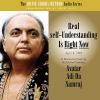
On the CD is a seminal Discourse on self-understanding given by Adi Da on April 8, 1993. In this Discourse, Adi Da calls all those inclined to Realize True Freedom to first recognize the failure of their search — which is based on the illusion of separation. Rather than engaging the ordinary pursuit of union with all others and things from which we feel separate, Avatar Adi Da says we must find out that our inherent Condition is one of Perfect Non-separation.
ADI DA: You are doing this contraction. The stress you say you are feeling is the result of that. . . The more you feel that you yourself are doing it, the more it relaxes. . . You are, as it relaxes, directly surrendered, truly forgetting yourself, entering into the Field of Non-Separateness — which is My Very Nature, Condition, Sign, Demonstration, Transmission.
Tags: CD
[Contains Italian subtitles. If the CC icon ("Subtitles/closed captions") has a red line under it, the subtitles should appear. If you don't see them, just press the CC icon to turn them on.]
This video clip is an excerpt from the DVD, The Relationship To The Guru Is The Constant In Life.
By tendency, people are bound to the natural cycle of ups and downs. Neither bodily pleasures nor spiritual pursuits result in True Freedom from this constant phasing. One path merely accentuates the descending (or bodily) experiences and the other, the ascending (or subtle) experiences.
In this Discourse, Avatar Adi Da reveals with absolute clarity how the relationship with the Guru gives freedom from this trap—because the Guru is the Manifestation of the Condition that is Prior to this mechanical cycling, not part of it.
Watching this DVD will transport viewers to a special moment in Adidam history. July 29, 1973, was the day Avatar Adi Da left Los Angeles for a Yajna (sacred journey) through India and Nepal. He returned as “Bubba Free John”, His first spontaneously revealed Teaching-Name. Thus, this was the last Discourse He gave as “Franklin Jones” (Avatar Adi Da’s birth name).
Tags: Italian

This video clip is an excerpt from the DVD, The Relationship To The Guru Is The Constant In Life.
By tendency, people are bound to the natural cycle of ups and downs. Neither bodily pleasures nor spiritual pursuits result in True Freedom from this constant phasing. One path merely accentuates the descending (or bodily) experiences and the other, the ascending (or subtle) experiences.
In this Discourse, Avatar Adi Da reveals with absolute clarity how the relationship with the Guru gives freedom from this trap—because the Guru is the Manifestation of the Condition that is Prior to this mechanical cycling, not part of it.
Watching this DVD will transport viewers to a special moment in Adidam history. July 29, 1973, was the day Avatar Adi Da left Los Angeles for a Yajna (sacred journey) through India and Nepal. He returned as “Bubba Free John”, His first spontaneously revealed Teaching-Name. Thus, this was the last Discourse He gave as “Franklin Jones” (Avatar Adi Da’s birth name).
Tags: Italian
[Contains Finnish subtitles. If the CC icon ("Subtitles/closed captions") has a red line under it, the subtitles should appear. If you don't see them, just press the CC icon to turn them on.]
Gerald Sheinfeld, joka on omistautunut Avatar Adi Dalle 1970-luvun alusta saakka, kertoo tarinan Gurunsa löytämisestä, ja siitä, miten hän välittömästi tunnisti Avatar Adi Dan ainutlaatuisen olotilan, joka viestii vapautta, iloa ja vapautusta. Gerald selittää, miten tuon kaltainen tunnistus Adi Dan olotilasta herkistää yksilön Aiemman Ykseyden asemaan.
Gerald Sheinfeld, a devotee of Avatar Adi Da since the early 1970's, tells a wonderful story about how he found his Guru, Adi Da Samraj and his immediate recognition of Adi Da's unique state of Freedom, Happiness, and Liberation. Gerald speaks about how that recognition of Adi Da has the capacity to awaken others to that state of Prior Unity.
Tags: Finnish

Gerald Sheinfeld, joka on omistautunut Avatar Adi Dalle 1970-luvun alusta saakka, kertoo tarinan Gurunsa löytämisestä, ja siitä, miten hän välittömästi tunnisti Avatar Adi Dan ainutlaatuisen olotilan, joka viestii vapautta, iloa ja vapautusta. Gerald selittää, miten tuon kaltainen tunnistus Adi Dan olotilasta herkistää yksilön Aiemman Ykseyden asemaan.
Gerald Sheinfeld, a devotee of Avatar Adi Da since the early 1970's, tells a wonderful story about how he found his Guru, Adi Da Samraj and his immediate recognition of Adi Da's unique state of Freedom, Happiness, and Liberation. Gerald speaks about how that recognition of Adi Da has the capacity to awaken others to that state of Prior Unity.
Tags: Finnish
[Contains Finnish subtitles. If the CC icon ("Subtitles/closed captions") has a red line under it, the subtitles should appear. If you don't see them, just press the CC icon to turn them on.]
Sanat kuten "vapaus" ja "rakkaus" määritetään yleisesssä maallikkoympäristössä erittäin rajoitetusti. Tässä Adi Dan esseen lausunnassa hän avaa näiden sanojen aitoa merkitystä.
Slides from a Darshan occasion of Avatar Adi Da at Adi Da Samrajashram.
The audio recording is an excerpt from a recitation of Adi Da's essay, "Freedom Is The Only Law and Happiness Is The Only Reality". This is the Epilogue from Adi Da's book, The Truly Human New World-Culture of Unbroken Real-God-Man, which was originally written in 2001, and updated on November 13, 2019. The essay is read by a student of Adi Da. In the secular world, words like "freedom" and " love" are given a very limited definition. In this essay, Adi Da expands the true meaning of both of these words.
ADI DA: I Am here to Divinely Liberate all beings.
I Am here to Grant True Freedom to every one.
“Freedom” is one of the principal words associated with the politics of this “late-time”. The general trend toward the democratization of the entire world carries with it an intensified interest in the concept of freedom and in the pursuit of freedom. However, in the context and circumstance of this “late-time”, the word “freedom” is used in such a way that the true import of the word is lost, and its meaning is transformed, and even vulgarized.
The same process of vulgarization has also occurred in the case of other words, such as (for example) the word “love”. The word “love” represents a profound concept and reality, but the word itself tends to be used very casually. People commonly say that they “love” this or that, meaning something quite different from what the word “love” rightly and truly signifies.
“Love” is a word that rightly refers to the universal Sacrifice of ego-“self”. Real love is a matter of transcending “self” (or going beyond your limitations in relation to others)—but, in the “late-time” circumstance of vulgarized culture, the word “love” has come to be used in relation to whatever satisfies your inclinations, or fulfills your desires, or (otherwise) somehow compensates for limitations in your life by pleasing you and (thereby) supporting your egoic disposition. None of that has anything to do with real love.
So it also is with the word “freedom”, and the notion of freedom. The world-culture of this “late-time” is essentially an ego-culture associated with complications in the first three stages of life. It is essentially an adolescent culture. And it is in the context of that culture that great words like “love” and “freedom” become vulgarized. In the adolescent disposition, the word “freedom”, like the word “love”, is reduced to an egoic meaning. People say they want to be “free”, or want to act “freely”, or want to be “free” to do this or that—but what they actually mean is that they want to be able to fulfill their desires without limitation. An adolescent reacting to parental authority or parental expectations regards any such authority or expectations to be oppressive or limiting. Therefore, such adolescents say that they want to be “free” to do whatever they please. And that is, in general, what is meant in this “late-time” by the word “freedom”. Even in the larger political sphere, the word “freedom” is used to express the (personal, and also collective) intent to be able to fulfill desires—and those desires are (necessarily) fundamentally ego-based.
What does the fulfillment of desires have to do with true freedom? Rightly, the word “freedom” is synonymous with the word “liberation”. To “be free”, or to “be liberated”, means to “go beyond bondage”. The opposite of “freedom” is “bondage”. If one is truly moved to be truly free, one is moved to relinquish (and go beyond) bondage. Such is the true Wisdom-understanding of freedom.
Neither true freedom, nor real love, nor any other great concept is rightly understood via the words and concepts of adolescents. There must be human maturity (and, therefore, growth in Wisdom) for the great meanings underlying these concepts to be understood and actually lived.
Be moved toward real love, without limit. Be moved toward real happiness, without limit.
Be moved toward true freedom, without limit. You should (and, ultimately, must) be so moved. But to actually realize love (or real happiness, or true freedom) without limit, you must deal with yourself most profoundly. You cannot merely be reactive, like an adolescent or a worldly person.
If you want to be truly free, you must first understand that you are bound, and you must understand how you are bound, and then you must do something about that. If, on the other hand, you are merely reactively inclined to fulfill desires, and you want to be (so-called) “free” to do so, then you are not examining your bondage—what its roots are, what its signs are, what its characteristics are—and, if you are not examining your bondage with real discriminative intelligence, you are also not doing what you must do in order to be truly free.
Tags: Finnish

Sanat kuten "vapaus" ja "rakkaus" määritetään yleisesssä maallikkoympäristössä erittäin rajoitetusti. Tässä Adi Dan esseen lausunnassa hän avaa näiden sanojen aitoa merkitystä.
Slides from a Darshan occasion of Avatar Adi Da at Adi Da Samrajashram.
The audio recording is an excerpt from a recitation of Adi Da's essay, "Freedom Is The Only Law and Happiness Is The Only Reality". This is the Epilogue from Adi Da's book, The Truly Human New World-Culture of Unbroken Real-God-Man, which was originally written in 2001, and updated on November 13, 2019. The essay is read by a student of Adi Da. In the secular world, words like "freedom" and " love" are given a very limited definition. In this essay, Adi Da expands the true meaning of both of these words.
ADI DA: I Am here to Divinely Liberate all beings.
I Am here to Grant True Freedom to every one.
“Freedom” is one of the principal words associated with the politics of this “late-time”. The general trend toward the democratization of the entire world carries with it an intensified interest in the concept of freedom and in the pursuit of freedom. However, in the context and circumstance of this “late-time”, the word “freedom” is used in such a way that the true import of the word is lost, and its meaning is transformed, and even vulgarized.
The same process of vulgarization has also occurred in the case of other words, such as (for example) the word “love”. The word “love” represents a profound concept and reality, but the word itself tends to be used very casually. People commonly say that they “love” this or that, meaning something quite different from what the word “love” rightly and truly signifies.
“Love” is a word that rightly refers to the universal Sacrifice of ego-“self”. Real love is a matter of transcending “self” (or going beyond your limitations in relation to others)—but, in the “late-time” circumstance of vulgarized culture, the word “love” has come to be used in relation to whatever satisfies your inclinations, or fulfills your desires, or (otherwise) somehow compensates for limitations in your life by pleasing you and (thereby) supporting your egoic disposition. None of that has anything to do with real love.
So it also is with the word “freedom”, and the notion of freedom. The world-culture of this “late-time” is essentially an ego-culture associated with complications in the first three stages of life. It is essentially an adolescent culture. And it is in the context of that culture that great words like “love” and “freedom” become vulgarized. In the adolescent disposition, the word “freedom”, like the word “love”, is reduced to an egoic meaning. People say they want to be “free”, or want to act “freely”, or want to be “free” to do this or that—but what they actually mean is that they want to be able to fulfill their desires without limitation. An adolescent reacting to parental authority or parental expectations regards any such authority or expectations to be oppressive or limiting. Therefore, such adolescents say that they want to be “free” to do whatever they please. And that is, in general, what is meant in this “late-time” by the word “freedom”. Even in the larger political sphere, the word “freedom” is used to express the (personal, and also collective) intent to be able to fulfill desires—and those desires are (necessarily) fundamentally ego-based.
What does the fulfillment of desires have to do with true freedom? Rightly, the word “freedom” is synonymous with the word “liberation”. To “be free”, or to “be liberated”, means to “go beyond bondage”. The opposite of “freedom” is “bondage”. If one is truly moved to be truly free, one is moved to relinquish (and go beyond) bondage. Such is the true Wisdom-understanding of freedom.
Neither true freedom, nor real love, nor any other great concept is rightly understood via the words and concepts of adolescents. There must be human maturity (and, therefore, growth in Wisdom) for the great meanings underlying these concepts to be understood and actually lived.
Be moved toward real love, without limit. Be moved toward real happiness, without limit.
Be moved toward true freedom, without limit. You should (and, ultimately, must) be so moved. But to actually realize love (or real happiness, or true freedom) without limit, you must deal with yourself most profoundly. You cannot merely be reactive, like an adolescent or a worldly person.
If you want to be truly free, you must first understand that you are bound, and you must understand how you are bound, and then you must do something about that. If, on the other hand, you are merely reactively inclined to fulfill desires, and you want to be (so-called) “free” to do so, then you are not examining your bondage—what its roots are, what its signs are, what its characteristics are—and, if you are not examining your bondage with real discriminative intelligence, you are also not doing what you must do in order to be truly free.
Tags: Finnish
Slides from a Darshan occasion of Avatar Adi Da at Adi Da Samrajashram.
The audio recording is an excerpt from a recitation of Adi Da's essay, "Freedom Is The Only Law and Happiness Is The Only Reality". This is the Epilogue from Adi Da's book, The Truly Human New World-Culture of Unbroken Real-God-Man, which was originally written in 2001, and updated on November 13, 2019. The essay is read by a student of Adi Da. In the secular world, words like "freedom" and " love" are given a very limited definition. In this essay, Adi Da expands the true meaning of both of these words.
ADI DA: I Am here to Divinely Liberate all beings.
I Am here to Grant True Freedom to every one.
“Freedom” is one of the principal words associated with the politics of this “late-time”. The general trend toward the democratization of the entire world carries with it an intensified interest in the concept of freedom and in the pursuit of freedom. However, in the context and circumstance of this “late-time”, the word “freedom” is used in such a way that the true import of the word is lost, and its meaning is transformed, and even vulgarized.
The same process of vulgarization has also occurred in the case of other words, such as (for example) the word “love”. The word “love” represents a profound concept and reality, but the word itself tends to be used very casually. People commonly say that they “love” this or that, meaning something quite different from what the word “love” rightly and truly signifies.
“Love” is a word that rightly refers to the universal Sacrifice of ego-“self”. Real love is a matter of transcending “self” (or going beyond your limitations in relation to others)—but, in the “late-time” circumstance of vulgarized culture, the word “love” has come to be used in relation to whatever satisfies your inclinations, or fulfills your desires, or (otherwise) somehow compensates for limitations in your life by pleasing you and (thereby) supporting your egoic disposition. None of that has anything to do with real love.
So it also is with the word “freedom”, and the notion of freedom. The world-culture of this “late-time” is essentially an ego-culture associated with complications in the first three stages of life. It is essentially an adolescent culture. And it is in the context of that culture that great words like “love” and “freedom” become vulgarized. In the adolescent disposition, the word “freedom”, like the word “love”, is reduced to an egoic meaning. People say they want to be “free”, or want to act “freely”, or want to be “free” to do this or that—but what they actually mean is that they want to be able to fulfill their desires without limitation. An adolescent reacting to parental authority or parental expectations regards any such authority or expectations to be oppressive or limiting. Therefore, such adolescents say that they want to be “free” to do whatever they please. And that is, in general, what is meant in this “late-time” by the word “freedom”. Even in the larger political sphere, the word “freedom” is used to express the (personal, and also collective) intent to be able to fulfill desires—and those desires are (necessarily) fundamentally ego-based.
What does the fulfillment of desires have to do with true freedom? Rightly, the word “freedom” is synonymous with the word “liberation”. To “be free”, or to “be liberated”, means to “go beyond bondage”. The opposite of “freedom” is “bondage”. If one is truly moved to be truly free, one is moved to relinquish (and go beyond) bondage. Such is the true Wisdom-understanding of freedom.
Neither true freedom, nor real love, nor any other great concept is rightly understood via the words and concepts of adolescents. There must be human maturity (and, therefore, growth in Wisdom) for the great meanings underlying these concepts to be understood and actually lived.
Be moved toward real love, without limit. Be moved toward real happiness, without limit.
Be moved toward true freedom, without limit. You should (and, ultimately, must) be so moved. But to actually realize love (or real happiness, or true freedom) without limit, you must deal with yourself most profoundly. You cannot merely be reactive, like an adolescent or a worldly person.
If you want to be truly free, you must first understand that you are bound, and you must understand how you are bound, and then you must do something about that. If, on the other hand, you are merely reactively inclined to fulfill desires, and you want to be (so-called) “free” to do so, then you are not examining your bondage—what its roots are, what its signs are, what its characteristics are—and, if you are not examining your bondage with real discriminative intelligence, you are also not doing what you must do in order to be truly free.

The audio recording is an excerpt from a recitation of Adi Da's essay, "Freedom Is The Only Law and Happiness Is The Only Reality". This is the Epilogue from Adi Da's book, The Truly Human New World-Culture of Unbroken Real-God-Man, which was originally written in 2001, and updated on November 13, 2019. The essay is read by a student of Adi Da. In the secular world, words like "freedom" and " love" are given a very limited definition. In this essay, Adi Da expands the true meaning of both of these words.
ADI DA: I Am here to Divinely Liberate all beings.
I Am here to Grant True Freedom to every one.
“Freedom” is one of the principal words associated with the politics of this “late-time”. The general trend toward the democratization of the entire world carries with it an intensified interest in the concept of freedom and in the pursuit of freedom. However, in the context and circumstance of this “late-time”, the word “freedom” is used in such a way that the true import of the word is lost, and its meaning is transformed, and even vulgarized.
The same process of vulgarization has also occurred in the case of other words, such as (for example) the word “love”. The word “love” represents a profound concept and reality, but the word itself tends to be used very casually. People commonly say that they “love” this or that, meaning something quite different from what the word “love” rightly and truly signifies.
“Love” is a word that rightly refers to the universal Sacrifice of ego-“self”. Real love is a matter of transcending “self” (or going beyond your limitations in relation to others)—but, in the “late-time” circumstance of vulgarized culture, the word “love” has come to be used in relation to whatever satisfies your inclinations, or fulfills your desires, or (otherwise) somehow compensates for limitations in your life by pleasing you and (thereby) supporting your egoic disposition. None of that has anything to do with real love.
So it also is with the word “freedom”, and the notion of freedom. The world-culture of this “late-time” is essentially an ego-culture associated with complications in the first three stages of life. It is essentially an adolescent culture. And it is in the context of that culture that great words like “love” and “freedom” become vulgarized. In the adolescent disposition, the word “freedom”, like the word “love”, is reduced to an egoic meaning. People say they want to be “free”, or want to act “freely”, or want to be “free” to do this or that—but what they actually mean is that they want to be able to fulfill their desires without limitation. An adolescent reacting to parental authority or parental expectations regards any such authority or expectations to be oppressive or limiting. Therefore, such adolescents say that they want to be “free” to do whatever they please. And that is, in general, what is meant in this “late-time” by the word “freedom”. Even in the larger political sphere, the word “freedom” is used to express the (personal, and also collective) intent to be able to fulfill desires—and those desires are (necessarily) fundamentally ego-based.
What does the fulfillment of desires have to do with true freedom? Rightly, the word “freedom” is synonymous with the word “liberation”. To “be free”, or to “be liberated”, means to “go beyond bondage”. The opposite of “freedom” is “bondage”. If one is truly moved to be truly free, one is moved to relinquish (and go beyond) bondage. Such is the true Wisdom-understanding of freedom.
Neither true freedom, nor real love, nor any other great concept is rightly understood via the words and concepts of adolescents. There must be human maturity (and, therefore, growth in Wisdom) for the great meanings underlying these concepts to be understood and actually lived.
Be moved toward real love, without limit. Be moved toward real happiness, without limit.
Be moved toward true freedom, without limit. You should (and, ultimately, must) be so moved. But to actually realize love (or real happiness, or true freedom) without limit, you must deal with yourself most profoundly. You cannot merely be reactive, like an adolescent or a worldly person.
If you want to be truly free, you must first understand that you are bound, and you must understand how you are bound, and then you must do something about that. If, on the other hand, you are merely reactively inclined to fulfill desires, and you want to be (so-called) “free” to do so, then you are not examining your bondage—what its roots are, what its signs are, what its characteristics are—and, if you are not examining your bondage with real discriminative intelligence, you are also not doing what you must do in order to be truly free.
[Contains Polish subtitles. If the CC icon ("Subtitles/closed captions") has a red line under it, the subtitles should appear. If you don't see them, just press the CC icon to turn them on.]
To nagranie jest fragmentem eseju "Prawdziwie ludzka kultura nowego świata" (2001; aktualizacja 13 listopada 2019 r.). Tekst jest czytany przez studenta Adi Da Samraj. Jestem tu, by wyzwolić wszystkie istoty.
Darshan occasion of Avatar Adi Da at Adi Da Samrajashram.
The audio recording is an excerpt from a recitation of Adi Da's essay, "Freedom Is The Only Law and Happiness Is The Only Reality". This is the Epilogue from Adi Da's book, The Truly Human New World-Culture of Unbroken Real-God-Man, which was originally written in 2001, and updated on November 13, 2019. The essay is read by a student of Adi Da.
ADI DA: Jestem tu, by wyzwolić wszystkie istoty.
Jestem tu po to, by każdemu dać prawdziwą wolność.
"Wolność" jest jednym z głównych słów związanych z polityką tego "późnych czasów". Ogólny trend demokratyzacji całego świata niesie ze sobą wzmożone zainteresowanie koncepcją wolności i dążeniem do wolności. Jednak w kontekście i uwarunkowaniach tego "późnego czasu" słowo "wolność" jest używane w taki sposób, że prawdziwe znaczenie tego słowa zostaje utracone, a jego znaczenie zmienione, a nawet wulgaryzowane.
Ten sam proces wulgaryzowania ma miejsce również w przypadku innych słów, takich jak (na przykład) słowo "miłość". Słowo "miłość" reprezentuje głęboką ideę w realiach życia, ale samo słowo jest używane bardzo swobodnie. Ludzie często mówią, że "kochają" to czy tamto, mając na myśli coś zupełnie innego niż właściwie znaczenie słowa "miłość".
"Miłość" to słowo, które słusznie sugeruje powszechne poświęcenie ego-"ja". Prawdziwa miłość jest kwestią transcendencji "ja" (lub wykraczania poza twoje ograniczenia w stosunku do innych) - ale w realiach wulgaryzowanej kultury "późnych czasów" słowo "miłość" zaczęło być używane w odniesieniu do tego, co zaspokaja twoje skłonności, spełnia twoje pragnienia, albo w jakiś sposób rekompensuje ograniczenia w twoim życiu, zadowalając cię i (tym samym) wspierając twoje egoistyczne usposobienie. To nie ma nic wspólnego z prawdziwą miłością.
Tak samo jest ze słowem "wolność" i pojęciem wolności. Kultura światowa tych "późnych czasów" jest zasadniczo kulturą egoistyczną związaną z komplikacjami w pierwszych trzech etapach życia. Jest to kultura nastolatków. I to właśnie w kontekście tej kultury wielkie słowa takie jak "miłość" i "wolność" są wulgaryzowane. W usposobieniu nastolatków słowo "wolność", podobnie jak słowo "miłość", sprowadza się do znaczenia egoistycznego. Ludzie mówią, że chcą być "wolni", chcą mieć "swobodę" działamia, lub chcą być "wolni" do robienia tego czy owego, ale właściwie chodzi im o to, że chcą być w stanie spełniać swoje pragnienia bez ograniczeń. Młodzież reagująca na opiekę rodzicielską lub oczekiwania rodziców uważa, że każdy taki autorytet lub oczekiwania mają charakter represyjny lub ograniczający. Dlatego tacy nastolatkowie mówią, że chcą być "wolni" aby robić to, co im się podoba. I ogólnie rzecz biorąc, w tym "późnym czasie" takie jest znaczenie słowa "wolność". Nawet w szerszej sferze politycznej słowo "wolność" jest używane do wyrażenia (osobistego, a także zbiorowego) zamiaru, aby możliwości spełniania pragnień, a pragnienia te (z konieczności) są zasadniczo egoistyczne.
ADI DA: I Am here to Divinely Liberate all beings.
I Am here to Grant True Freedom to every one.
“Freedom” is one of the principal words associated with the politics of this “late-time”. The general trend toward the democratization of the entire world carries with it an intensified interest in the concept of freedom and in the pursuit of freedom. However, in the context and circumstance of this “late-time”, the word “freedom” is used in such a way that the true import of the word is lost, and its meaning is transformed, and even vulgarized.
The same process of vulgarization has also occurred in the case of other words, such as (for example) the word “love”. The word “love” represents a profound concept and reality, but the word itself tends to be used very casually. People commonly say that they “love” this or that, meaning something quite different from what the word “love” rightly and truly signifies.
“Love” is a word that rightly refers to the universal Sacrifice of ego-“self”. Real love is a matter of transcending “self” (or going beyond your limitations in relation to others)—but, in the “late-time” circumstance of vulgarized culture, the word “love” has come to be used in relation to whatever satisfies your inclinations, or fulfills your desires, or (otherwise) somehow compensates for limitations in your life by pleasing you and (thereby) supporting your egoic disposition. None of that has anything to do with real love.
So it also is with the word “freedom”, and the notion of freedom. The world-culture of this “late-time” is essentially an ego-culture associated with complications in the first three stages of life. It is essentially an adolescent culture. And it is in the context of that culture that great words like “love” and “freedom” become vulgarized. In the adolescent disposition, the word “freedom”, like the word “love”, is reduced to an egoic meaning. People say they want to be “free”, or want to act “freely”, or want to be “free” to do this or that—but what they actually mean is that they want to be able to fulfill their desires without limitation. An adolescent reacting to parental authority or parental expectations regards any such authority or expectations to be oppressive or limiting. Therefore, such adolescents say that they want to be “free” to do whatever they please. And that is, in general, what is meant in this “late-time” by the word “freedom”. Even in the larger political sphere, the word “freedom” is used to express the (personal, and also collective) intent to be able to fulfill desires—and those desires are (necessarily) fundamentally ego-based.
What does the fulfillment of desires have to do with true freedom? Rightly, the word “freedom” is synonymous with the word “liberation”. To “be free”, or to “be liberated”, means to “go beyond bondage”. The opposite of “freedom” is “bondage”. If one is truly moved to be truly free, one is moved to relinquish (and go beyond) bondage. Such is the true Wisdom-understanding of freedom.
Neither true freedom, nor real love, nor any other great concept is rightly understood via the words and concepts of adolescents. There must be human maturity (and, therefore, growth in Wisdom) for the great meanings underlying these concepts to be understood and actually lived.
Be moved toward real love, without limit. Be moved toward real happiness, without limit.
Be moved toward true freedom, without limit. You should (and, ultimately, must) be so moved. But to actually realize love (or real happiness, or true freedom) without limit, you must deal with yourself most profoundly. You cannot merely be reactive, like an adolescent or a worldly person.
If you want to be truly free, you must first understand that you are bound, and you must understand how you are bound, and then you must do something about that. If, on the other hand, you are merely reactively inclined to fulfill desires, and you want to be (so-called) “free” to do so, then you are not examining your bondage—what its roots are, what its signs are, what its characteristics are—and, if you are not examining your bondage with real discriminative intelligence, you are also not doing what you must do in order to be truly free.
Tags: Polish

To nagranie jest fragmentem eseju "Prawdziwie ludzka kultura nowego świata" (2001; aktualizacja 13 listopada 2019 r.). Tekst jest czytany przez studenta Adi Da Samraj. Jestem tu, by wyzwolić wszystkie istoty.
Darshan occasion of Avatar Adi Da at Adi Da Samrajashram.
The audio recording is an excerpt from a recitation of Adi Da's essay, "Freedom Is The Only Law and Happiness Is The Only Reality". This is the Epilogue from Adi Da's book, The Truly Human New World-Culture of Unbroken Real-God-Man, which was originally written in 2001, and updated on November 13, 2019. The essay is read by a student of Adi Da.
ADI DA: Jestem tu, by wyzwolić wszystkie istoty.
Jestem tu po to, by każdemu dać prawdziwą wolność.
"Wolność" jest jednym z głównych słów związanych z polityką tego "późnych czasów". Ogólny trend demokratyzacji całego świata niesie ze sobą wzmożone zainteresowanie koncepcją wolności i dążeniem do wolności. Jednak w kontekście i uwarunkowaniach tego "późnego czasu" słowo "wolność" jest używane w taki sposób, że prawdziwe znaczenie tego słowa zostaje utracone, a jego znaczenie zmienione, a nawet wulgaryzowane.
Ten sam proces wulgaryzowania ma miejsce również w przypadku innych słów, takich jak (na przykład) słowo "miłość". Słowo "miłość" reprezentuje głęboką ideę w realiach życia, ale samo słowo jest używane bardzo swobodnie. Ludzie często mówią, że "kochają" to czy tamto, mając na myśli coś zupełnie innego niż właściwie znaczenie słowa "miłość".
"Miłość" to słowo, które słusznie sugeruje powszechne poświęcenie ego-"ja". Prawdziwa miłość jest kwestią transcendencji "ja" (lub wykraczania poza twoje ograniczenia w stosunku do innych) - ale w realiach wulgaryzowanej kultury "późnych czasów" słowo "miłość" zaczęło być używane w odniesieniu do tego, co zaspokaja twoje skłonności, spełnia twoje pragnienia, albo w jakiś sposób rekompensuje ograniczenia w twoim życiu, zadowalając cię i (tym samym) wspierając twoje egoistyczne usposobienie. To nie ma nic wspólnego z prawdziwą miłością.
Tak samo jest ze słowem "wolność" i pojęciem wolności. Kultura światowa tych "późnych czasów" jest zasadniczo kulturą egoistyczną związaną z komplikacjami w pierwszych trzech etapach życia. Jest to kultura nastolatków. I to właśnie w kontekście tej kultury wielkie słowa takie jak "miłość" i "wolność" są wulgaryzowane. W usposobieniu nastolatków słowo "wolność", podobnie jak słowo "miłość", sprowadza się do znaczenia egoistycznego. Ludzie mówią, że chcą być "wolni", chcą mieć "swobodę" działamia, lub chcą być "wolni" do robienia tego czy owego, ale właściwie chodzi im o to, że chcą być w stanie spełniać swoje pragnienia bez ograniczeń. Młodzież reagująca na opiekę rodzicielską lub oczekiwania rodziców uważa, że każdy taki autorytet lub oczekiwania mają charakter represyjny lub ograniczający. Dlatego tacy nastolatkowie mówią, że chcą być "wolni" aby robić to, co im się podoba. I ogólnie rzecz biorąc, w tym "późnym czasie" takie jest znaczenie słowa "wolność". Nawet w szerszej sferze politycznej słowo "wolność" jest używane do wyrażenia (osobistego, a także zbiorowego) zamiaru, aby możliwości spełniania pragnień, a pragnienia te (z konieczności) są zasadniczo egoistyczne.
ADI DA: I Am here to Divinely Liberate all beings.
I Am here to Grant True Freedom to every one.
“Freedom” is one of the principal words associated with the politics of this “late-time”. The general trend toward the democratization of the entire world carries with it an intensified interest in the concept of freedom and in the pursuit of freedom. However, in the context and circumstance of this “late-time”, the word “freedom” is used in such a way that the true import of the word is lost, and its meaning is transformed, and even vulgarized.
The same process of vulgarization has also occurred in the case of other words, such as (for example) the word “love”. The word “love” represents a profound concept and reality, but the word itself tends to be used very casually. People commonly say that they “love” this or that, meaning something quite different from what the word “love” rightly and truly signifies.
“Love” is a word that rightly refers to the universal Sacrifice of ego-“self”. Real love is a matter of transcending “self” (or going beyond your limitations in relation to others)—but, in the “late-time” circumstance of vulgarized culture, the word “love” has come to be used in relation to whatever satisfies your inclinations, or fulfills your desires, or (otherwise) somehow compensates for limitations in your life by pleasing you and (thereby) supporting your egoic disposition. None of that has anything to do with real love.
So it also is with the word “freedom”, and the notion of freedom. The world-culture of this “late-time” is essentially an ego-culture associated with complications in the first three stages of life. It is essentially an adolescent culture. And it is in the context of that culture that great words like “love” and “freedom” become vulgarized. In the adolescent disposition, the word “freedom”, like the word “love”, is reduced to an egoic meaning. People say they want to be “free”, or want to act “freely”, or want to be “free” to do this or that—but what they actually mean is that they want to be able to fulfill their desires without limitation. An adolescent reacting to parental authority or parental expectations regards any such authority or expectations to be oppressive or limiting. Therefore, such adolescents say that they want to be “free” to do whatever they please. And that is, in general, what is meant in this “late-time” by the word “freedom”. Even in the larger political sphere, the word “freedom” is used to express the (personal, and also collective) intent to be able to fulfill desires—and those desires are (necessarily) fundamentally ego-based.
What does the fulfillment of desires have to do with true freedom? Rightly, the word “freedom” is synonymous with the word “liberation”. To “be free”, or to “be liberated”, means to “go beyond bondage”. The opposite of “freedom” is “bondage”. If one is truly moved to be truly free, one is moved to relinquish (and go beyond) bondage. Such is the true Wisdom-understanding of freedom.
Neither true freedom, nor real love, nor any other great concept is rightly understood via the words and concepts of adolescents. There must be human maturity (and, therefore, growth in Wisdom) for the great meanings underlying these concepts to be understood and actually lived.
Be moved toward real love, without limit. Be moved toward real happiness, without limit.
Be moved toward true freedom, without limit. You should (and, ultimately, must) be so moved. But to actually realize love (or real happiness, or true freedom) without limit, you must deal with yourself most profoundly. You cannot merely be reactive, like an adolescent or a worldly person.
If you want to be truly free, you must first understand that you are bound, and you must understand how you are bound, and then you must do something about that. If, on the other hand, you are merely reactively inclined to fulfill desires, and you want to be (so-called) “free” to do so, then you are not examining your bondage—what its roots are, what its signs are, what its characteristics are—and, if you are not examining your bondage with real discriminative intelligence, you are also not doing what you must do in order to be truly free.
Tags: Polish

This video clip, "Guru jest stabilną stałą w życiowych wzlotach i upadkach" ("The Relationship To The Guru Is The Constant In Life") is an excerpt from the DVD, The Relationship To The Guru Is The Constant In Life.
By tendency, people are bound to the natural cycle of ups and downs. Neither bodily pleasures nor spiritual pursuits result in True Freedom from this constant phasing. One path merely accentuates the descending (or bodily) experiences and the other, the ascending (or subtle) experiences.
In this Discourse, Avatar Adi Da reveals with absolute clarity how the relationship with the Guru gives freedom from this trap—because the Guru is the Manifestation of the Condition that is Prior to this mechanical cycling, not part of it.
Watching this DVD will transport viewers to a special moment in Adidam history. July 29, 1973, was the day Avatar Adi Da left Los Angeles for a Yajna (sacred journey) through India and Nepal. He returned as “Bubba Free John”, His first spontaneously revealed Teaching-Name. Thus, this was the last Discourse He gave as “Franklin Jones” (Avatar Adi Da’s birth name).
Tags: Polish DVD
This video clip is an excerpt from the DVD, The Relationship To The Guru Is The Constant In Life.
By tendency, people are bound to the natural cycle of ups and downs. Neither bodily pleasures nor spiritual pursuits result in True Freedom from this constant phasing. One path merely accentuates the descending (or bodily) experiences and the other, the ascending (or subtle) experiences.
In this Discourse, Avatar Adi Da reveals with absolute clarity how the relationship with the Guru gives freedom from this trap—because the Guru is the Manifestation of the Condition that is Prior to this mechanical cycling, not part of it.
Watching this DVD will transport viewers to a special moment in Adidam history. July 29, 1973, was the day Avatar Adi Da left Los Angeles for a Yajna (sacred journey) through India and Nepal. He returned as “Bubba Free John”, His first spontaneously revealed Teaching-Name. Thus, this was the last Discourse He gave as “Franklin Jones” (Avatar Adi Da’s birth name).
By tendency, people are bound to the natural cycle of ups and downs. Neither bodily pleasures nor spiritual pursuits result in True Freedom from this constant phasing. One path merely accentuates the descending (or bodily) experiences and the other, the ascending (or subtle) experiences.
In this Discourse, Avatar Adi Da reveals with absolute clarity how the relationship with the Guru gives freedom from this trap—because the Guru is the Manifestation of the Condition that is Prior to this mechanical cycling, not part of it.
Watching this DVD will transport viewers to a special moment in Adidam history. July 29, 1973, was the day Avatar Adi Da left Los Angeles for a Yajna (sacred journey) through India and Nepal. He returned as “Bubba Free John”, His first spontaneously revealed Teaching-Name. Thus, this was the last Discourse He gave as “Franklin Jones” (Avatar Adi Da’s birth name).
This video clip is an excerpt from the DVD, The Relationship To The Guru Is The Constant In Life.
By tendency, people are bound to the natural cycle of ups and downs. Neither bodily pleasures nor spiritual pursuits result in True Freedom from this constant phasing. One path merely accentuates the descending (or bodily) experiences and the other, the ascending (or subtle) experiences.
In this Discourse, Avatar Adi Da reveals with absolute clarity how the relationship with the Guru gives freedom from this trap—because the Guru is the Manifestation of the Condition that is Prior to this mechanical cycling, not part of it.
Watching this DVD will transport viewers to a special moment in Adidam history. July 29, 1973, was the day Avatar Adi Da left Los Angeles for a Yajna (sacred journey) through India and Nepal. He returned as “Bubba Free John”, His first spontaneously revealed Teaching-Name. Thus, this was the last Discourse He gave as “Franklin Jones” (Avatar Adi Da’s birth name).
Tags: DVD

By tendency, people are bound to the natural cycle of ups and downs. Neither bodily pleasures nor spiritual pursuits result in True Freedom from this constant phasing. One path merely accentuates the descending (or bodily) experiences and the other, the ascending (or subtle) experiences.
In this Discourse, Avatar Adi Da reveals with absolute clarity how the relationship with the Guru gives freedom from this trap—because the Guru is the Manifestation of the Condition that is Prior to this mechanical cycling, not part of it.
Watching this DVD will transport viewers to a special moment in Adidam history. July 29, 1973, was the day Avatar Adi Da left Los Angeles for a Yajna (sacred journey) through India and Nepal. He returned as “Bubba Free John”, His first spontaneously revealed Teaching-Name. Thus, this was the last Discourse He gave as “Franklin Jones” (Avatar Adi Da’s birth name).
Tags: DVD
[Contains Italian subtitles. If the CC icon ("Subtitles/closed captions") has a red line under it, the subtitles should appear. If you don't see them, just press the CC icon to turn them on.]
Gerald Sheinfeld, un devoto di Avatar Adi Da sin dai primi anni 70, ci racconta la magnifica storia dell'incontro col suo Maestro, Adi Da Samraj, e del suo immediato riconoscere in Adi Da la singolaritŕ del Suo stato di Felicitŕ e Liberazione. Gerald parla anche del modo in cui il riconoscere Adi Da risvegli implicitamente il nostro stesso stato di Unitŕ-a-priori.
Gerald Sheinfeld, a devotee of Avatar Adi Da since the early 1970's, tells a wonderful story about how he found his Guru, Adi Da Samraj and his immediate recognition of Adi Da's unique state of Freedom, Happiness, and Liberation. Gerald speaks about how that recognition of Adi Da has the capacity to awaken others to that state of Prior Unity.
Gerald tells many more stories of his life of more than 45 years with Adi Da in his book, At the Feet of the Spiritual Master. Some of these stories are also available in audio form on his downloadable album, At the Feet of the Spiritual Master.
Tags: DVD CD Italian

Gerald Sheinfeld, un devoto di Avatar Adi Da sin dai primi anni 70, ci racconta la magnifica storia dell'incontro col suo Maestro, Adi Da Samraj, e del suo immediato riconoscere in Adi Da la singolaritŕ del Suo stato di Felicitŕ e Liberazione. Gerald parla anche del modo in cui il riconoscere Adi Da risvegli implicitamente il nostro stesso stato di Unitŕ-a-priori.
Gerald Sheinfeld, a devotee of Avatar Adi Da since the early 1970's, tells a wonderful story about how he found his Guru, Adi Da Samraj and his immediate recognition of Adi Da's unique state of Freedom, Happiness, and Liberation. Gerald speaks about how that recognition of Adi Da has the capacity to awaken others to that state of Prior Unity.
Gerald tells many more stories of his life of more than 45 years with Adi Da in his book, At the Feet of the Spiritual Master. Some of these stories are also available in audio form on his downloadable album, At the Feet of the Spiritual Master.
Tags: DVD CD Italian
[Contains Spanish subtitles. If the CC icon ("Subtitles/closed captions") has a red line under it, the subtitles should appear. If you don't see them, just press the CC icon to turn them on.]
Tras haber ido a Adi Da en Febrero de 1972, antes de la inauguration del primer ashram de Adi Da, y participar como devoto a lo largo de los ańos de Su Enseńanza Formal y el Trabajo de Bendición, el seńor Sheinfeld fue testigo de toda la vida de Enseńanza, Instrucción y Bendición Espiritual de Adi Da Samraj. Las historias de Gerald dan una visión única de la relación Gurú / devoto, llena de la Sabiduría transformadora de Adi Da y Su humor penetrante del corazón.
Gerald Sheinfeld, a devotee of Avatar Adi Da since the early 1970's, tells a wonderful story about how he found his Guru, Adi Da Samraj and his immediate recognition of Adi Da's unique state of Freedom, Happiness, and Liberation. Gerald speaks about how that recognition of Adi Da has the capacity to awaken others to that state of Prior Unity.
Gerald tells many more stories of his life of more than 45 years with Adi Da in his book, At the Feet of the Spiritual Master. Some of these stories are also available in audio form on his downloadable album, At the Feet of the Spiritual Master.
Tags: Spanish CD DVD

Tras haber ido a Adi Da en Febrero de 1972, antes de la inauguration del primer ashram de Adi Da, y participar como devoto a lo largo de los ańos de Su Enseńanza Formal y el Trabajo de Bendición, el seńor Sheinfeld fue testigo de toda la vida de Enseńanza, Instrucción y Bendición Espiritual de Adi Da Samraj. Las historias de Gerald dan una visión única de la relación Gurú / devoto, llena de la Sabiduría transformadora de Adi Da y Su humor penetrante del corazón.
Gerald Sheinfeld, a devotee of Avatar Adi Da since the early 1970's, tells a wonderful story about how he found his Guru, Adi Da Samraj and his immediate recognition of Adi Da's unique state of Freedom, Happiness, and Liberation. Gerald speaks about how that recognition of Adi Da has the capacity to awaken others to that state of Prior Unity.
Gerald tells many more stories of his life of more than 45 years with Adi Da in his book, At the Feet of the Spiritual Master. Some of these stories are also available in audio form on his downloadable album, At the Feet of the Spiritual Master.
Tags: Spanish CD DVD
[Contains Polish subtitles. If the CC icon ("Subtitles/closed captions") has a red line under it, the subtitles should appear. If you don't see them, just press the CC icon to turn them on.]
Gerald Sheinfeld, uczeń Awatara Adi Da od wczesnych lat 70-tych, opowiada wspaniałą historię o tym, jak odnalazł swojego Guru i natychmiast rozpoznał wyjątkowy Stan Adi Da: Miłość, Szczęście i Wyzwolenie. Gerald mówi o tym, w jaki sposób rozpoznanie Adi Da budzi człowieka do Stanu Inherentnej Jedności.
Gerald Sheinfeld, a devotee of Avatar Adi Da since the early 1970's, tells a wonderful story about how he found his Guru, Adi Da Samraj and his immediate recognition of Adi Da's unique state of Freedom, Happiness, and Liberation. Gerald speaks about how that recognition of Adi Da has the capacity to awaken others to that state of Prior Unity.
Gerald tells many more stories of his life of more than 45 years with Adi Da in his book, At the Feet of the Spiritual Master. Some of these stories are also available in audio form on his downloadable album, At the Feet of the Spiritual Master.
Tags: Polish CD DVD

Gerald Sheinfeld, uczeń Awatara Adi Da od wczesnych lat 70-tych, opowiada wspaniałą historię o tym, jak odnalazł swojego Guru i natychmiast rozpoznał wyjątkowy Stan Adi Da: Miłość, Szczęście i Wyzwolenie. Gerald mówi o tym, w jaki sposób rozpoznanie Adi Da budzi człowieka do Stanu Inherentnej Jedności.
Gerald Sheinfeld, a devotee of Avatar Adi Da since the early 1970's, tells a wonderful story about how he found his Guru, Adi Da Samraj and his immediate recognition of Adi Da's unique state of Freedom, Happiness, and Liberation. Gerald speaks about how that recognition of Adi Da has the capacity to awaken others to that state of Prior Unity.
Gerald tells many more stories of his life of more than 45 years with Adi Da in his book, At the Feet of the Spiritual Master. Some of these stories are also available in audio form on his downloadable album, At the Feet of the Spiritual Master.
Tags: Polish CD DVD
[Contains Czech subtitles. If the CC icon ("Subtitles/closed captions") has a red line under it, the subtitles should appear. If you don't see them, just press the CC icon to turn them on.]
Adi Da Samráj oslovuje fakt, že konečné osvobození či dosažení Realizace nelze nikdy dosáhnout pomocí sexu, vědy nebo náboženství! Tvrdí, že ve skutečnosti "Realizace nemá nic společného s komplexem těla a mysli“. Jedná se o přímou účast v samotné Skutečnosti, která předchází veškerou činnost vykonávanou tělem-myslí.
In this Adidam Revelation Discourse from January 21, 2005, Adi Da reveals that Liberation cannot ever be achieved through sex, science, or religion! And He makes the astounding assertion, “Realization has nothing to do with the body-mind.”
Watch this DVD for Adi Da's Instruction on True Freedom, which He says is discovered only in the utter transcending of “point of view”, by means of the Transmission of Reality Itself. "The 'self'-contraction, the 'point of view', the 'point-of-view'-machine and what it presumes to be Reality, the illusions of Reality created by 'point of view' — these are the important matters to be understood. The 'you' to which you refer as 'I', the ego-'I', is a 'point-of-view'-machine. It is subject to the illusions of the cosmic apparition, the illusions that 'point of view' itself is subject to — space-time, mass, and so forth."
The DVD, Beyond Sex, Science, and "self", is available from The Dawn Horse Press. Subtitles in English, Spanish, French, Italian, German, Dutch, Russian, Polish, Czech, and Hebrew. A CD version is also available.
Tags: Czech Avataric Discourse Perfect Practice DVD CD

Adi Da Samráj oslovuje fakt, že konečné osvobození či dosažení Realizace nelze nikdy dosáhnout pomocí sexu, vědy nebo náboženství! Tvrdí, že ve skutečnosti "Realizace nemá nic společného s komplexem těla a mysli“. Jedná se o přímou účast v samotné Skutečnosti, která předchází veškerou činnost vykonávanou tělem-myslí.
In this Adidam Revelation Discourse from January 21, 2005, Adi Da reveals that Liberation cannot ever be achieved through sex, science, or religion! And He makes the astounding assertion, “Realization has nothing to do with the body-mind.”
Watch this DVD for Adi Da's Instruction on True Freedom, which He says is discovered only in the utter transcending of “point of view”, by means of the Transmission of Reality Itself. "The 'self'-contraction, the 'point of view', the 'point-of-view'-machine and what it presumes to be Reality, the illusions of Reality created by 'point of view' — these are the important matters to be understood. The 'you' to which you refer as 'I', the ego-'I', is a 'point-of-view'-machine. It is subject to the illusions of the cosmic apparition, the illusions that 'point of view' itself is subject to — space-time, mass, and so forth."
The DVD, Beyond Sex, Science, and "self", is available from The Dawn Horse Press. Subtitles in English, Spanish, French, Italian, German, Dutch, Russian, Polish, Czech, and Hebrew. A CD version is also available.
Tags: Czech Avataric Discourse Perfect Practice DVD CD
[Contains Polish subtitles. If the CC icon ("Subtitles/closed captions") has a red line under it, the subtitles should appear. If you don't see them, just press the CC icon to turn them on.]
W tym fragmencie rozmowy ze swoimi uczniami Adi Da Samraj mówi o Urzeczywistnieniu i konieczności praktyki duchowej dzięki której mechanizmy emocjonalno-seksualne wzorców, demonstrowane w ludzkim życiu się w formie egotycznego "własnego ja" i społecznego modelu "ja i inni" mogą być poznane, a w Praktyce Doskonałej ulegają transcendencji.
In this Adidam Revelation Discourse from January 21, 2005, Adi Da reveals that Liberation cannot ever be achieved through sex, science, or religion! And He makes the astounding assertion, “Realization has nothing to do with the body-mind.”
Watch this DVD for Adi Da's Instruction on True Freedom, which He says is discovered only in the utter transcending of “point of view”, by means of the Transmission of Reality Itself. "The 'self'-contraction, the 'point of view', the 'point-of-view'-machine and what it presumes to be Reality, the illusions of Reality created by 'point of view' — these are the important matters to be understood. The 'you' to which you refer as 'I', the ego-'I', is a 'point-of-view'-machine. It is subject to the illusions of the cosmic apparition, the illusions that 'point of view' itself is subject to — space-time, mass, and so forth."
The DVD, Beyond Sex, Science, and "self", is available from The Dawn Horse Press. Subtitles in English, Spanish, French, Italian, German, Dutch, Russian, Polish, Czech, and Hebrew. A CD version is also available.
Tags: Avataric Discourse DVD CD Polish

W tym fragmencie rozmowy ze swoimi uczniami Adi Da Samraj mówi o Urzeczywistnieniu i konieczności praktyki duchowej dzięki której mechanizmy emocjonalno-seksualne wzorców, demonstrowane w ludzkim życiu się w formie egotycznego "własnego ja" i społecznego modelu "ja i inni" mogą być poznane, a w Praktyce Doskonałej ulegają transcendencji.
In this Adidam Revelation Discourse from January 21, 2005, Adi Da reveals that Liberation cannot ever be achieved through sex, science, or religion! And He makes the astounding assertion, “Realization has nothing to do with the body-mind.”
Watch this DVD for Adi Da's Instruction on True Freedom, which He says is discovered only in the utter transcending of “point of view”, by means of the Transmission of Reality Itself. "The 'self'-contraction, the 'point of view', the 'point-of-view'-machine and what it presumes to be Reality, the illusions of Reality created by 'point of view' — these are the important matters to be understood. The 'you' to which you refer as 'I', the ego-'I', is a 'point-of-view'-machine. It is subject to the illusions of the cosmic apparition, the illusions that 'point of view' itself is subject to — space-time, mass, and so forth."
The DVD, Beyond Sex, Science, and "self", is available from The Dawn Horse Press. Subtitles in English, Spanish, French, Italian, German, Dutch, Russian, Polish, Czech, and Hebrew. A CD version is also available.
Tags: Avataric Discourse DVD CD Polish
"The Dreaded Gom-Boo, or the Imaginary Disease That Religion Seeks to Cure" was the primary talk given by Adi Da at Da Love-Ananda Mahal (in Kauai, Hawaii) during a period of His Work with devotees (September 9, 1982 - February 4, 1983) that focused on renunciation. Many of the talks and essays from this period were included in a book by the same name, The Dreaded Gom-Boo.
This audio begins with a testimonial from one of the devotees who participated in the "Dreaded Gom-Boo" gatherings with Adi Da. The actual talk begins at 1:25.
The focus of this talk is a startling and humorous insight: All religion seeks to cure us of an unreal disease, which Adi Da humorously calls the "Dreaded Gom-Boo". This disease is our constant presumption that we have somehow "fallen from Grace" and are in need of the salvatory "cure" of religious belief.
Adi Da uproots this religious conceit and illusion by confessing (based on His Own Realization) that we are always already present and alive in and as Divine Being. The "good news" of Adi Da's Way is that, in present Communion with the Divine (made available through Adi Da's Spiritual Transmission), we need not seek to be cured, but must only feel, observe, understand, and renounce the very activity of seeking itself, and thus be restored to our native Happiness and Freedom. This insightful, liberating message cuts through thousands of years of religious and mystical dogma and beliefs by revealing a radical spiritual way eminently suited to the needs of modern men and women.
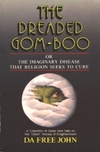
This audio begins with a testimonial from one of the devotees who participated in the "Dreaded Gom-Boo" gatherings with Adi Da. The actual talk begins at 1:25.
The focus of this talk is a startling and humorous insight: All religion seeks to cure us of an unreal disease, which Adi Da humorously calls the "Dreaded Gom-Boo". This disease is our constant presumption that we have somehow "fallen from Grace" and are in need of the salvatory "cure" of religious belief.
Adi Da uproots this religious conceit and illusion by confessing (based on His Own Realization) that we are always already present and alive in and as Divine Being. The "good news" of Adi Da's Way is that, in present Communion with the Divine (made available through Adi Da's Spiritual Transmission), we need not seek to be cured, but must only feel, observe, understand, and renounce the very activity of seeking itself, and thus be restored to our native Happiness and Freedom. This insightful, liberating message cuts through thousands of years of religious and mystical dogma and beliefs by revealing a radical spiritual way eminently suited to the needs of modern men and women.
Audio/Video Links:


Most Popular Categories:
- Adi Da's Talks (463)
- Devotees' Stories of Adi Da (150)
- Adi Da's Image-Art (68)
- Not-Two Is Peace (54)
- Formal Darshan Occasions (36)
- Adi Da's Poetry (11)
- Tribute to Adi Da's Life and Work (11)
- Avataric Discourses: 2004 - 2005 (196)
- DVDs (198) / CDs (240) from the Dawn Horse Press
- Multi-Part Series (67)