Adi Da Up Close
Audio/Video Library
Our multimedia library currently contains 1,023 YouTube video clips and audio clips about (or related to) Adi Da and Adidam.


[Contains Finnish subtitles. If the CC icon ("Subtitles/closed captions") has a red line under it, the subtitles should appear. If you don't see them, just press the CC icon to turn them on.]
"Onko Muurahaisella Egoa?" ("Is an ant an ego?") is a video excerpt from a humorous and profoundly insightful Avataric Discourse (given by Adi Da on October 20, 2004 at Adi Da Samrajashram), Adi Da considers the difference between self-consciousness and egoity, referring to both humans and non-humans (including dogs, ants, and trees).
ADI DA: [Laughs] You generally attribute egoity to human beings, but you wonder about everything else. For instance, what about not something relatively inert like a rug or even just standing there and not seeming to be particularly responsive, like a tree. But what about a dog? Is a dog, do you think dogs are egos when you see them, just as readily as you think of human beings as egos? But, why do you draw the line? I mean how far does it go? Where do you stop thinking of living entities, at least, as egos? Do you just presume everything bigger than a cricket is an ego? Or is everything that moves in your, from your perspective experientially or in your natural presumptions, how far do, does the fact of egoity extend in your presumption.
Well, is an ant an ego in your presumption?
The word “ego” is actually a Greek word which means “I”. I consider it with you and talk about it in terms of self-contraction and so forth, but, so that’s the elaboration on its meaning, but the word simply means “I” which means the reference, self-reference, the reflexive, reflexive pronoun as it’s called of self-reference. So, does an ant feel self-referential?
You observe them protecting themselves and struggling with others. Couldn’t do so without some kind of self-consciousness, could it? So, you naturally presume that even something like an ant is, is a self, an ego, self-aware. Does something have to move from its spatial location? Does it have to be able to take a walk or, such as an ant or a human being, or can a tree? Does a tree have self-consciousness, exhibit self-consciousness. . .
What about trees? They are entities with apparent self-consciousness of a kind. They are in that sense, egos. But are they egoic? Are they functioning egoically? Are they feeling that they are in bondage and moved to seek as human beings are and as you feel in your own case, you see? Trees don’t seem to behave, generally speaking, in quite that way. They are self-conscious as organisms, but they don’t seem to be particularly disturbed about being trees. They seem more characterized by some kind of contemplation in which they don’t feel disturbed.
But if you observe non-humans, virtually all of them show signs of setting themselves apart and entering into a contemplative state that resembles some kind of a samadhi or meditative condition.
Why do you think human beings are disturbed? You see, why is human egoity what it is? If you observe how it appears in evidence in non-humans, suggests that human beings are the way they are because they’re confined, and not just confined by walls and bars. Some people are, and they get very disturbed there, and walk back and forth or get catatonic.
Your bondage is your own activity, and it also extends from conditions. Conditions can reinforce or seem to justify self-contraction. But still what you’re suffering is self-contraction itself.
So, human beings are actually confined, and they are self-confined, and otherwise, also, living in various modes and degrees of confinement by conditions of life and in fact, human beings feel confined by bodily existence, because however healthy you may be at the moment, you know you’re going to die, and are potentially, potentially, you could suffer any number of great happenings. And you anticipate that inevitably, you will, sooner or later, experience some fundamental difficulties that you would prefer not to have to endure, including disease and death.
Well, everything that’s physically living is going to die. The trouble, the difference is does it drive you crazy, make you seek, or are you at ease, because you haven’t lost touch with what transcends that possibility?
Tags: Avataric Discourse Finnish

"Onko Muurahaisella Egoa?" ("Is an ant an ego?") is a video excerpt from a humorous and profoundly insightful Avataric Discourse (given by Adi Da on October 20, 2004 at Adi Da Samrajashram), Adi Da considers the difference between self-consciousness and egoity, referring to both humans and non-humans (including dogs, ants, and trees).
ADI DA: [Laughs] You generally attribute egoity to human beings, but you wonder about everything else. For instance, what about not something relatively inert like a rug or even just standing there and not seeming to be particularly responsive, like a tree. But what about a dog? Is a dog, do you think dogs are egos when you see them, just as readily as you think of human beings as egos? But, why do you draw the line? I mean how far does it go? Where do you stop thinking of living entities, at least, as egos? Do you just presume everything bigger than a cricket is an ego? Or is everything that moves in your, from your perspective experientially or in your natural presumptions, how far do, does the fact of egoity extend in your presumption.
Well, is an ant an ego in your presumption?
The word “ego” is actually a Greek word which means “I”. I consider it with you and talk about it in terms of self-contraction and so forth, but, so that’s the elaboration on its meaning, but the word simply means “I” which means the reference, self-reference, the reflexive, reflexive pronoun as it’s called of self-reference. So, does an ant feel self-referential?
You observe them protecting themselves and struggling with others. Couldn’t do so without some kind of self-consciousness, could it? So, you naturally presume that even something like an ant is, is a self, an ego, self-aware. Does something have to move from its spatial location? Does it have to be able to take a walk or, such as an ant or a human being, or can a tree? Does a tree have self-consciousness, exhibit self-consciousness. . .
What about trees? They are entities with apparent self-consciousness of a kind. They are in that sense, egos. But are they egoic? Are they functioning egoically? Are they feeling that they are in bondage and moved to seek as human beings are and as you feel in your own case, you see? Trees don’t seem to behave, generally speaking, in quite that way. They are self-conscious as organisms, but they don’t seem to be particularly disturbed about being trees. They seem more characterized by some kind of contemplation in which they don’t feel disturbed.
But if you observe non-humans, virtually all of them show signs of setting themselves apart and entering into a contemplative state that resembles some kind of a samadhi or meditative condition.
Why do you think human beings are disturbed? You see, why is human egoity what it is? If you observe how it appears in evidence in non-humans, suggests that human beings are the way they are because they’re confined, and not just confined by walls and bars. Some people are, and they get very disturbed there, and walk back and forth or get catatonic.
Your bondage is your own activity, and it also extends from conditions. Conditions can reinforce or seem to justify self-contraction. But still what you’re suffering is self-contraction itself.
So, human beings are actually confined, and they are self-confined, and otherwise, also, living in various modes and degrees of confinement by conditions of life and in fact, human beings feel confined by bodily existence, because however healthy you may be at the moment, you know you’re going to die, and are potentially, potentially, you could suffer any number of great happenings. And you anticipate that inevitably, you will, sooner or later, experience some fundamental difficulties that you would prefer not to have to endure, including disease and death.
Well, everything that’s physically living is going to die. The trouble, the difference is does it drive you crazy, make you seek, or are you at ease, because you haven’t lost touch with what transcends that possibility?
Tags: Avataric Discourse Finnish
[Contains Spanish subtitles. If the CC icon ("Subtitles/closed captions") has a red line under it, the subtitles should appear. If you don't see them, just press the CC icon to turn them on.]
"żEs una Hormiga un Ego?" ("Is an ant an ego?") is a video excerpt from a humorous and profoundly insightful Avataric Discourse (given by Adi Da on October 20, 2004 at Adi Da Samrajashram), Adi Da considers the difference between self-consciousness and egoity, referring to both humans and non-humans (including dogs, ants, and trees).
ADI DA: [Laughs] You generally attribute egoity to human beings, but you wonder about everything else. For instance, what about not something relatively inert like a rug or even just standing there and not seeming to be particularly responsive, like a tree. But what about a dog? Is a dog, do you think dogs are egos when you see them, just as readily as you think of human beings as egos? But, why do you draw the line? I mean how far does it go? Where do you stop thinking of living entities, at least, as egos? Do you just presume everything bigger than a cricket is an ego? Or is everything that moves in your, from your perspective experientially or in your natural presumptions, how far do, does the fact of egoity extend in your presumption.
Well, is an ant an ego in your presumption?
The word “ego” is actually a Greek word which means “I”. I consider it with you and talk about it in terms of self-contraction and so forth, but, so that’s the elaboration on its meaning, but the word simply means “I” which means the reference, self-reference, the reflexive, reflexive pronoun as it’s called of self-reference. So, does an ant feel self-referential?
You observe them protecting themselves and struggling with others. Couldn’t do so without some kind of self-consciousness, could it? So, you naturally presume that even something like an ant is, is a self, an ego, self-aware. Does something have to move from its spatial location? Does it have to be able to take a walk or, such as an ant or a human being, or can a tree? Does a tree have self-consciousness, exhibit self-consciousness. . .
What about trees? They are entities with apparent self-consciousness of a kind. They are in that sense, egos. But are they egoic? Are they functioning egoically? Are they feeling that they are in bondage and moved to seek as human beings are and as you feel in your own case, you see? Trees don’t seem to behave, generally speaking, in quite that way. They are self-conscious as organisms, but they don’t seem to be particularly disturbed about being trees. They seem more characterized by some kind of contemplation in which they don’t feel disturbed.
But if you observe non-humans, virtually all of them show signs of setting themselves apart and entering into a contemplative state that resembles some kind of a samadhi or meditative condition.
Why do you think human beings are disturbed? You see, why is human egoity what it is? If you observe how it appears in evidence in non-humans, suggests that human beings are the way they are because they’re confined, and not just confined by walls and bars. Some people are, and they get very disturbed there, and walk back and forth or get catatonic.
Your bondage is your own activity, and it also extends from conditions. Conditions can reinforce or seem to justify self-contraction. But still what you’re suffering is self-contraction itself.
So, human beings are actually confined, and they are self-confined, and otherwise, also, living in various modes and degrees of confinement by conditions of life and in fact, human beings feel confined by bodily existence, because however healthy you may be at the moment, you know you’re going to die, and are potentially, potentially, you could suffer any number of great happenings. And you anticipate that inevitably, you will, sooner or later, experience some fundamental difficulties that you would prefer not to have to endure, including disease and death.
Well, everything that’s physically living is going to die. The trouble, the difference is does it drive you crazy, make you seek, or are you at ease, because you haven’t lost touch with what transcends that possibility?
Tags: Avataric Discourse Spanish

"żEs una Hormiga un Ego?" ("Is an ant an ego?") is a video excerpt from a humorous and profoundly insightful Avataric Discourse (given by Adi Da on October 20, 2004 at Adi Da Samrajashram), Adi Da considers the difference between self-consciousness and egoity, referring to both humans and non-humans (including dogs, ants, and trees).
ADI DA: [Laughs] You generally attribute egoity to human beings, but you wonder about everything else. For instance, what about not something relatively inert like a rug or even just standing there and not seeming to be particularly responsive, like a tree. But what about a dog? Is a dog, do you think dogs are egos when you see them, just as readily as you think of human beings as egos? But, why do you draw the line? I mean how far does it go? Where do you stop thinking of living entities, at least, as egos? Do you just presume everything bigger than a cricket is an ego? Or is everything that moves in your, from your perspective experientially or in your natural presumptions, how far do, does the fact of egoity extend in your presumption.
Well, is an ant an ego in your presumption?
The word “ego” is actually a Greek word which means “I”. I consider it with you and talk about it in terms of self-contraction and so forth, but, so that’s the elaboration on its meaning, but the word simply means “I” which means the reference, self-reference, the reflexive, reflexive pronoun as it’s called of self-reference. So, does an ant feel self-referential?
You observe them protecting themselves and struggling with others. Couldn’t do so without some kind of self-consciousness, could it? So, you naturally presume that even something like an ant is, is a self, an ego, self-aware. Does something have to move from its spatial location? Does it have to be able to take a walk or, such as an ant or a human being, or can a tree? Does a tree have self-consciousness, exhibit self-consciousness. . .
What about trees? They are entities with apparent self-consciousness of a kind. They are in that sense, egos. But are they egoic? Are they functioning egoically? Are they feeling that they are in bondage and moved to seek as human beings are and as you feel in your own case, you see? Trees don’t seem to behave, generally speaking, in quite that way. They are self-conscious as organisms, but they don’t seem to be particularly disturbed about being trees. They seem more characterized by some kind of contemplation in which they don’t feel disturbed.
But if you observe non-humans, virtually all of them show signs of setting themselves apart and entering into a contemplative state that resembles some kind of a samadhi or meditative condition.
Why do you think human beings are disturbed? You see, why is human egoity what it is? If you observe how it appears in evidence in non-humans, suggests that human beings are the way they are because they’re confined, and not just confined by walls and bars. Some people are, and they get very disturbed there, and walk back and forth or get catatonic.
Your bondage is your own activity, and it also extends from conditions. Conditions can reinforce or seem to justify self-contraction. But still what you’re suffering is self-contraction itself.
So, human beings are actually confined, and they are self-confined, and otherwise, also, living in various modes and degrees of confinement by conditions of life and in fact, human beings feel confined by bodily existence, because however healthy you may be at the moment, you know you’re going to die, and are potentially, potentially, you could suffer any number of great happenings. And you anticipate that inevitably, you will, sooner or later, experience some fundamental difficulties that you would prefer not to have to endure, including disease and death.
Well, everything that’s physically living is going to die. The trouble, the difference is does it drive you crazy, make you seek, or are you at ease, because you haven’t lost touch with what transcends that possibility?
Tags: Avataric Discourse Spanish
[Contains Polish subtitles. If the CC icon ("Subtitles/closed captions") has a red line under it, the subtitles should appear. If you don't see them, just press the CC icon to turn them on.]
ADI DA: „Ludzka rozpacz i straty są dla mnie wstrząsające i straszne, to ogromny ciężar. Nieuchronnie współczuję i błogosławię ludzi w ich kłopotach. Musisz jednak zrozumieć, że taki jest charakter tego miejsca. To nie jest Utopia. To nie raj. To miejsce śmierci, zakończeń, cierpienia, ulotnych rozrywek, to zbyt mało. Ale jedynie reagować przez lata na twoje problemy i próbować z tego zbudować twoje życie to bezowocny wysiłek. Musisz wznieść się ponad reagowanie na chwile cierpienia i straty bo twoja kolej nadchodzi. Pewnego dnia to będzie twoja śmierć. Wszyscy przeminą. Wszystko przepadnie. Wszystko się straci. Wszystko się zmieni. Każda możliwa separacja nastąpi. Musisz poznać to miejsce, w którym się znalazłeś i żyć zgodnie z tą wiedzą. A nie godzić się z przyjmowanym fałszywym obrazem bytu czy świata, i próbować idealizować jakiś aspekt potencjalnego doświadczenia, które sprowadza się do uzależnień i powtórzeń tego samego. A wszystko po to, aby uniknąć wiedzy o życiu i o całym piekle, które nadciąga nad Ziemię i jest tutaj, w tych strasznych, ciemnych, czasach niewiedzy, w tych złych, morderczych czasach. Bez względu na to, co tutaj jest twórcze, szlachetne czy interesujące musisz poważnie traktować rzeczywistość warunkowej egzystencji i zrozumieć, że nie spełnisz się tutaj”.
Adi Da następnie mówi o tym, że to zrozumienie w naturalny sposób doprowadzi osobę do wyrzeczenia się poszukiwania spełnienia na tym świecie i do otwarcia się na Prawdę i Rzeczywistości, które On i Jego Nauczanie oraz inne Dary Wyzwolenia oferują.
"To miejsce to nie Utopia" ("This Place Is Not a Utopia") is an excerpt from an Avataric Discourse given by Adi Da Samraj on October 6, 2005, at the Mountain Of Attention Sanctuary.
ADI DA: "I find people's sorrows and losses to be heartbreaking and terrible and an immense burden and I am sympathetic and bless people in their trouble. However you must understand that is the nature of this place. This is not utopia, it is not paradise. It is a place of death, endings, suffering, brief amusements. It is not enough and merely to react to your difficulties for overlong and try to make an entire life out of it is fruitless. You do have to move on beyond that reaction to any moments suffering and loss. You must know the place you’re in and live in accordance with that knowledge instead of being sympathetic with some false view of the world or self or trying to idealize some aspect of potential experience, indulging in what amounts to addictions, repetitions of experiences, in order to avoid the knowledge of what is inherent in life, as well as all the hell that is coming on earth and is here. You will not be fulfilled.”
Tags: Polish

ADI DA: „Ludzka rozpacz i straty są dla mnie wstrząsające i straszne, to ogromny ciężar. Nieuchronnie współczuję i błogosławię ludzi w ich kłopotach. Musisz jednak zrozumieć, że taki jest charakter tego miejsca. To nie jest Utopia. To nie raj. To miejsce śmierci, zakończeń, cierpienia, ulotnych rozrywek, to zbyt mało. Ale jedynie reagować przez lata na twoje problemy i próbować z tego zbudować twoje życie to bezowocny wysiłek. Musisz wznieść się ponad reagowanie na chwile cierpienia i straty bo twoja kolej nadchodzi. Pewnego dnia to będzie twoja śmierć. Wszyscy przeminą. Wszystko przepadnie. Wszystko się straci. Wszystko się zmieni. Każda możliwa separacja nastąpi. Musisz poznać to miejsce, w którym się znalazłeś i żyć zgodnie z tą wiedzą. A nie godzić się z przyjmowanym fałszywym obrazem bytu czy świata, i próbować idealizować jakiś aspekt potencjalnego doświadczenia, które sprowadza się do uzależnień i powtórzeń tego samego. A wszystko po to, aby uniknąć wiedzy o życiu i o całym piekle, które nadciąga nad Ziemię i jest tutaj, w tych strasznych, ciemnych, czasach niewiedzy, w tych złych, morderczych czasach. Bez względu na to, co tutaj jest twórcze, szlachetne czy interesujące musisz poważnie traktować rzeczywistość warunkowej egzystencji i zrozumieć, że nie spełnisz się tutaj”.
Adi Da następnie mówi o tym, że to zrozumienie w naturalny sposób doprowadzi osobę do wyrzeczenia się poszukiwania spełnienia na tym świecie i do otwarcia się na Prawdę i Rzeczywistości, które On i Jego Nauczanie oraz inne Dary Wyzwolenia oferują.
"To miejsce to nie Utopia" ("This Place Is Not a Utopia") is an excerpt from an Avataric Discourse given by Adi Da Samraj on October 6, 2005, at the Mountain Of Attention Sanctuary.
ADI DA: "I find people's sorrows and losses to be heartbreaking and terrible and an immense burden and I am sympathetic and bless people in their trouble. However you must understand that is the nature of this place. This is not utopia, it is not paradise. It is a place of death, endings, suffering, brief amusements. It is not enough and merely to react to your difficulties for overlong and try to make an entire life out of it is fruitless. You do have to move on beyond that reaction to any moments suffering and loss. You must know the place you’re in and live in accordance with that knowledge instead of being sympathetic with some false view of the world or self or trying to idealize some aspect of potential experience, indulging in what amounts to addictions, repetitions of experiences, in order to avoid the knowledge of what is inherent in life, as well as all the hell that is coming on earth and is here. You will not be fulfilled.”
Tags: Polish
This is a video excerpt from an Avataric Discourse given by Adi Da at Adi Da Samrajashram, on January 21, 2005. The Avataric Discourse is available on the DVD, Beyond Sex, Science, and self.
In this Discourse, Adi Da explains why Liberation cannot ever be achieved through science or conventional religion.
Tags: DVD Avataric Discourse
In this Discourse, Adi Da explains why Liberation cannot ever be achieved through science or conventional religion.
Tags: DVD Avataric Discourse
[Contains Italian subtitles. If the CC icon ("Subtitles/closed captions") has a red line under it, the subtitles should appear. If you don't see them, just press the CC icon to turn them on.]
"Le formiche hanno un ego" ("Ants have an ego") is a video excerpt from a humorous and profoundly insightful Avataric Discourse (given by Adi Da on October 20, 2004 at Adi Da Samrajashram), Adi Da considers the difference between self-consciousness and egoity, referring to both humans and non-humans (including dogs, ants, and trees).
ADI DA: [Laughs] You generally attribute egoity to human beings, but you wonder about everything else. For instance, what about not something relatively inert like a rug or even just standing there and not seeming to be particularly responsive, like a tree. But what about a dog? Is a dog, do you think dogs are egos when you see them, just as readily as you think of human beings as egos? But, why do you draw the line? I mean how far does it go? Where do you stop thinking of living entities, at least, as egos? Do you just presume everything bigger than a cricket is an ego? Or is everything that moves in your, from your perspective experientially or in your natural presumptions, how far do, does the fact of egoity extend in your presumption.
Well, is an ant an ego in your presumption?
The word “ego” is actually a Greek word which means “I”. I consider it with you and talk about it in terms of self-contraction and so forth, but, so that’s the elaboration on its meaning, but the word simply means “I” which means the reference, self-reference, the reflexive, reflexive pronoun as it’s called of self-reference. So, does an ant feel self-referential?
You observe them protecting themselves and struggling with others. Couldn’t do so without some kind of self-consciousness, could it? So, you naturally presume that even something like an ant is, is a self, an ego, self-aware. Does something have to move from its spatial location? Does it have to be able to take a walk or, such as an ant or a human being, or can a tree? Does a tree have self-consciousness, exhibit self-consciousness. . .
What about trees? They are entities with apparent self-consciousness of a kind. They are in that sense, egos. But are they egoic? Are they functioning egoically? Are they feeling that they are in bondage and moved to seek as human beings are and as you feel in your own case, you see? Trees don’t seem to behave, generally speaking, in quite that way. They are self-conscious as organisms, but they don’t seem to be particularly disturbed about being trees. They seem more characterized by some kind of contemplation in which they don’t feel disturbed.
But if you observe non-humans, virtually all of them show signs of setting themselves apart and entering into a contemplative state that resembles some kind of a samadhi or meditative condition.
Why do you think human beings are disturbed? You see, why is human egoity what it is? If you observe how it appears in evidence in non-humans, suggests that human beings are the way they are because they’re confined, and not just confined by walls and bars. Some people are, and they get very disturbed there, and walk back and forth or get catatonic.
Your bondage is your own activity, and it also extends from conditions. Conditions can reinforce or seem to justify self-contraction. But still what you’re suffering is self-contraction itself.
So, human beings are actually confined, and they are self-confined, and otherwise, also, living in various modes and degrees of confinement by conditions of life and in fact, human beings feel confined by bodily existence, because however healthy you may be at the moment, you know you’re going to die, and are potentially, potentially, you could suffer any number of great happenings. And you anticipate that inevitably, you will, sooner or later, experience some fundamental difficulties that you would prefer not to have to endure, including disease and death.
Well, everything that’s physically living is going to die. The trouble, the difference is does it drive you crazy, make you seek, or are you at ease, because you haven’t lost touch with what transcends that possibility?
Tags: Avataric Discourse Italian

"Le formiche hanno un ego" ("Ants have an ego") is a video excerpt from a humorous and profoundly insightful Avataric Discourse (given by Adi Da on October 20, 2004 at Adi Da Samrajashram), Adi Da considers the difference between self-consciousness and egoity, referring to both humans and non-humans (including dogs, ants, and trees).
ADI DA: [Laughs] You generally attribute egoity to human beings, but you wonder about everything else. For instance, what about not something relatively inert like a rug or even just standing there and not seeming to be particularly responsive, like a tree. But what about a dog? Is a dog, do you think dogs are egos when you see them, just as readily as you think of human beings as egos? But, why do you draw the line? I mean how far does it go? Where do you stop thinking of living entities, at least, as egos? Do you just presume everything bigger than a cricket is an ego? Or is everything that moves in your, from your perspective experientially or in your natural presumptions, how far do, does the fact of egoity extend in your presumption.
Well, is an ant an ego in your presumption?
The word “ego” is actually a Greek word which means “I”. I consider it with you and talk about it in terms of self-contraction and so forth, but, so that’s the elaboration on its meaning, but the word simply means “I” which means the reference, self-reference, the reflexive, reflexive pronoun as it’s called of self-reference. So, does an ant feel self-referential?
You observe them protecting themselves and struggling with others. Couldn’t do so without some kind of self-consciousness, could it? So, you naturally presume that even something like an ant is, is a self, an ego, self-aware. Does something have to move from its spatial location? Does it have to be able to take a walk or, such as an ant or a human being, or can a tree? Does a tree have self-consciousness, exhibit self-consciousness. . .
What about trees? They are entities with apparent self-consciousness of a kind. They are in that sense, egos. But are they egoic? Are they functioning egoically? Are they feeling that they are in bondage and moved to seek as human beings are and as you feel in your own case, you see? Trees don’t seem to behave, generally speaking, in quite that way. They are self-conscious as organisms, but they don’t seem to be particularly disturbed about being trees. They seem more characterized by some kind of contemplation in which they don’t feel disturbed.
But if you observe non-humans, virtually all of them show signs of setting themselves apart and entering into a contemplative state that resembles some kind of a samadhi or meditative condition.
Why do you think human beings are disturbed? You see, why is human egoity what it is? If you observe how it appears in evidence in non-humans, suggests that human beings are the way they are because they’re confined, and not just confined by walls and bars. Some people are, and they get very disturbed there, and walk back and forth or get catatonic.
Your bondage is your own activity, and it also extends from conditions. Conditions can reinforce or seem to justify self-contraction. But still what you’re suffering is self-contraction itself.
So, human beings are actually confined, and they are self-confined, and otherwise, also, living in various modes and degrees of confinement by conditions of life and in fact, human beings feel confined by bodily existence, because however healthy you may be at the moment, you know you’re going to die, and are potentially, potentially, you could suffer any number of great happenings. And you anticipate that inevitably, you will, sooner or later, experience some fundamental difficulties that you would prefer not to have to endure, including disease and death.
Well, everything that’s physically living is going to die. The trouble, the difference is does it drive you crazy, make you seek, or are you at ease, because you haven’t lost touch with what transcends that possibility?
Tags: Avataric Discourse Italian
[Contains Finnish subtitles. If the CC icon ("Subtitles/closed captions") has a red line under it, the subtitles should appear. If you don't see them, just press the CC icon to turn them on.]
Tässä keskustelussa Adi Da käsittelee pelon perimmäistä olemusta.
"Meditaatiotekniikat Eivät Karkota Pelkoa" ("Meditation Techniques Don't Touch Fear") is a video excerpt from the Avataric Discourse of August 23, 2004 at Adi Da Samrajashram.
Adi Da explains how ordinary meditation techniques accomplish nothing more than relaxation. They don't touch the egoic identification with the body-mind. Only the Way of Adidam (practiced in every detail) does that. Practice of the Way of Adidam does not require one to stop fear (which continues to serve a useful, practical role for the survival of the body-mind). But in every moment of real practice of the Way of Adidam, one is released from identification with the body-mind, and so one is not bound by any fear the body-mind may be experiencing.
Tags: Avataric Discourse Finnish

Tässä keskustelussa Adi Da käsittelee pelon perimmäistä olemusta.
"Meditaatiotekniikat Eivät Karkota Pelkoa" ("Meditation Techniques Don't Touch Fear") is a video excerpt from the Avataric Discourse of August 23, 2004 at Adi Da Samrajashram.
Adi Da explains how ordinary meditation techniques accomplish nothing more than relaxation. They don't touch the egoic identification with the body-mind. Only the Way of Adidam (practiced in every detail) does that. Practice of the Way of Adidam does not require one to stop fear (which continues to serve a useful, practical role for the survival of the body-mind). But in every moment of real practice of the Way of Adidam, one is released from identification with the body-mind, and so one is not bound by any fear the body-mind may be experiencing.
Tags: Avataric Discourse Finnish
[Contains Polish subtitles. If the CC icon ("Subtitles/closed captions") has a red line under it, the subtitles should appear. If you don't see them, just press the CC icon to turn them on.]
W tym dyskursie z 2005 roku Adi Da Samraj mówi o tym, że Urzeczywistnienia nie można osiągnąć poprzez naukę lub konwencjonalną religię.
"Adidam nie jest religijną drogą" ("Adidam is not a religion") is a video excerpt from an Avataric Discourse, given by Adi Da on January 21, 2005, at Adi Da Samrajashram.
The full Discourse is available on the DVD, Beyond Sex, Science, and "self".
ADI DA: "Religion" belongs to a domain of efforts that are "point-of-view"-based, cosmological in nature, associated with myths of apparent Reality as perceived. None of that has anything to do with the Realization of Reality Itself.
Tags: Avataric Discourse Polish

W tym dyskursie z 2005 roku Adi Da Samraj mówi o tym, że Urzeczywistnienia nie można osiągnąć poprzez naukę lub konwencjonalną religię.
"Adidam nie jest religijną drogą" ("Adidam is not a religion") is a video excerpt from an Avataric Discourse, given by Adi Da on January 21, 2005, at Adi Da Samrajashram.
The full Discourse is available on the DVD, Beyond Sex, Science, and "self".
ADI DA: "Religion" belongs to a domain of efforts that are "point-of-view"-based, cosmological in nature, associated with myths of apparent Reality as perceived. None of that has anything to do with the Realization of Reality Itself.
Tags: Avataric Discourse Polish
[Contains Polish subtitles. If the CC icon ("Subtitles/closed captions") has a red line under it, the subtitles should appear. If you don't see them, just press the CC icon to turn them on.]
W tym dyskursie z 2005 roku Adi Da Samraj mówi o tym, że Urzeczywistnienia nie można osiągnąć poprzez naukę lub konwencjonalną religię.
"W poszukiwaniu wiarygodnego wszechświata" ("You Do Not See the Room As It Is") is a video excerpt from an Avataric Discourse given by Adi Da at Adi Da Samrajashram, on January 21, 2005. The Avataric Discourse is available on the DVD, Beyond Sex, Science, and self.
Tags: Polish DVD Avataric Discourse
W tym dyskursie z 2005 roku Adi Da Samraj mówi o tym, że Urzeczywistnienia nie można osiągnąć poprzez naukę lub konwencjonalną religię.
"W poszukiwaniu wiarygodnego wszechświata" ("You Do Not See the Room As It Is") is a video excerpt from an Avataric Discourse given by Adi Da at Adi Da Samrajashram, on January 21, 2005. The Avataric Discourse is available on the DVD, Beyond Sex, Science, and self.
Tags: Polish DVD Avataric Discourse

This video clip is an excerpt from the DVD, The Relationship To The Guru Is The Constant In Life.
Kolejny fragment wczesnego dyskursu (29 lipca 1973) Adi Da Samraj:
ADI DA: To, co dzieje się w procesie Satsangu, czyli prawdziwego życia duchowego, nie polega na tym, żeby się wznieść na wyżyny i już nigdy nie upaść. Praktykując stajesz się całkowicie identyczny ze stanem przed wzlotami i upadkami, przed bogiem i diabłem, przed duchem i ciałem i wszystkimi tymi przeciwieństwami. Prawdziwa błogość rzeczywistości i prawdziwego boga staje się twoją urzeczywistnioną naturą.
Zaczynasz obserwować to w świadomości - a także w życiu codziennym bo proces Satsangu działa nie tylko subiektywnie. To nie jest po prostu ujawnienie twoich skłonności, uczuć, myśli i snów. Ten proces przejawia się również zewnętrznie, powodując nieustanne zmiany okoliczności w twoim życiu, przynosząc zmieny stanów wewnętrzny. Z cazsem zaczynasz obserwować, że cykl wzlotów i upadków - sam cykl - nie znika. Ale już nie masz wątpliwości co do charakteru zachodzących w cyklu zmian. Teraz możesz obserwować cechy życia i świadomości, ale ich cykl przestaje być dylematem.
Watching this DVD will transport viewers to a special moment in Adidam history. July 29, 1973, was the day Avatar Adi Da left Los Angeles for a Yajna (sacred journey) through India and Nepal. He returned as “Bubba Free John”, His first spontaneously revealed Teaching-Name. Thus, this was the last Discourse He gave as “Franklin Jones” (Avatar Adi Da’s birth name).
Tags: Polish DVD
A video excerpt from an Avataric Discourse, given by Adi Da on January 21, 2005, at Adi Da Samrajashram.
The full Discourse is available on the DVD, Beyond Sex, Science, and "self".
ADI DA: "Religion" belongs to a domain of efforts that are "point-of-view"-based, cosmological in nature, associated with myths of apparent Reality as perceived. None of that has anything to do with the Realization of Reality Itself.
Tags: Avataric Discourse DVD
The full Discourse is available on the DVD, Beyond Sex, Science, and "self".
ADI DA: "Religion" belongs to a domain of efforts that are "point-of-view"-based, cosmological in nature, associated with myths of apparent Reality as perceived. None of that has anything to do with the Realization of Reality Itself.
Tags: Avataric Discourse DVD
From a presentation about the Silver Hall at Adi Da Samrajashram. Edited by Alan Corne.
Adi Da recites His "Five Reality-Teachings", as we watch scenes from Adi Da Samrajashram, followed by Darshan of Avatar Adi Da.
Notice this:
1. You are not the one who wakes, or dreams, or sleeps.
2. You Are the actionless and formless Mere Witness of the three common states — of waking, dreaming and sleeping — and of all the apparent contents and “experiences” associated with the three common states, of waking, and of dreaming, and of sleeping.
3. You are not the body, or the doer of action, or the doer of even any of the body’s actions or functions.
4. You are not the mind, or the thinker, or the doer of even any of the actions or functions of mind or of body-mind.
5. No matter what arises — whether as or in the state of waking, or of dreaming, or of sleeping — you Are the actionless, and formless, and thought-free Mere Witness of attention itself, and of every apparent “object” of attention, and of any and every state of “experience”, and of the entirety of whatever and all that arises.
Always intensively “consider” these Five Reality-Teachings.
Always intensively observe and notice every moment of your “experience” — whether waking, dreaming, or sleeping — and, thus and thereby, “consider” and test and directly prove these Five Reality-Teachings in the moment-to-moment of your every kind and state of “experience”.
Avatar Adi Da Samraj, pp. 559-561, The Gnosticon
Tags: Darshan

Adi Da recites His "Five Reality-Teachings", as we watch scenes from Adi Da Samrajashram, followed by Darshan of Avatar Adi Da.
Notice this:
1. You are not the one who wakes, or dreams, or sleeps.
2. You Are the actionless and formless Mere Witness of the three common states — of waking, dreaming and sleeping — and of all the apparent contents and “experiences” associated with the three common states, of waking, and of dreaming, and of sleeping.
3. You are not the body, or the doer of action, or the doer of even any of the body’s actions or functions.
4. You are not the mind, or the thinker, or the doer of even any of the actions or functions of mind or of body-mind.
5. No matter what arises — whether as or in the state of waking, or of dreaming, or of sleeping — you Are the actionless, and formless, and thought-free Mere Witness of attention itself, and of every apparent “object” of attention, and of any and every state of “experience”, and of the entirety of whatever and all that arises.
Always intensively “consider” these Five Reality-Teachings.
Always intensively observe and notice every moment of your “experience” — whether waking, dreaming, or sleeping — and, thus and thereby, “consider” and test and directly prove these Five Reality-Teachings in the moment-to-moment of your every kind and state of “experience”.
Avatar Adi Da Samraj, pp. 559-561, The Gnosticon
Tags: Darshan
[Contains Italian subtitles. If the CC icon ("Subtitles/closed captions") has a red line under it, the subtitles should appear. If you don't see them, just press the CC icon to turn them on.]
"Quello che Accade Dopo la Morte E' Determinato dal Come Si E' Vissuti" ("What Happens After Death Is Determined By the Way You Live") is published as "After Death, Mind Makes You", in the book, Easy Death. It is from a talk given by Adi Da on December 12, 1988 at Adi Da Samrajashram.
In this sobering discourse, Adi Da speaks of the condition after death in which mind determines one's circumstance, without the limitations of the body, brain and unconsciousness. He addresses the fact that where one's attention is fixed during life affects attention and destiny after life. He recommends that devotees direct their attention to sadhana so that the purification process gives one wisdom that frees one from karmic limitations.
Tags: death Italian

"Quello che Accade Dopo la Morte E' Determinato dal Come Si E' Vissuti" ("What Happens After Death Is Determined By the Way You Live") is published as "After Death, Mind Makes You", in the book, Easy Death. It is from a talk given by Adi Da on December 12, 1988 at Adi Da Samrajashram.
In this sobering discourse, Adi Da speaks of the condition after death in which mind determines one's circumstance, without the limitations of the body, brain and unconsciousness. He addresses the fact that where one's attention is fixed during life affects attention and destiny after life. He recommends that devotees direct their attention to sadhana so that the purification process gives one wisdom that frees one from karmic limitations.
Tags: death Italian
This audio excerpt is from a talk given by Adi Da on April 16, 1995, in Hymns To Me, at Adi Da Samrajashram.
Adi Da describes how the preparatory stages of practice of the Reality-Way of Adidam are associated with attention, and how the attachment to attention and all its objects prevents the Realization of Reality As It Is. He goes on to describe the unique advantage that His bodily Incarnation provides in the process of such Realization, for all time, and how the relationship to Him occurs — directly and personally — beyond the life of His human Form.
Tags: CD
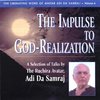
Adi Da describes how the preparatory stages of practice of the Reality-Way of Adidam are associated with attention, and how the attachment to attention and all its objects prevents the Realization of Reality As It Is. He goes on to describe the unique advantage that His bodily Incarnation provides in the process of such Realization, for all time, and how the relationship to Him occurs — directly and personally — beyond the life of His human Form.
Tags: CD
Alexis talks about her "Where Is Happiness?" Retreat at the Man Of Radical Understanding Retreat Center (behind her) at the Mountain Of Attention Sanctuary in Northern California.
Everybody wants to be happy, but how do you actually "do" happiness? Please join us to find out more about true happiness in the free two day retreats that we offer in many locations around the world.
The retreats are based on, and inspired by, the Wisdom of Adi Da Samraj. They include guided meditations, yoga lessons, video presentations, group considerations, personal stories, contemplative walks, and delicious vegetarian meals.
The retreats are hosted by a team of experienced and long time practitioners of Avatar Adi Da’s Teachings who guide the retreat program in an inspiring fashion.
The complete weekend program (including workbook and materials) is offered for free. You only pay a contribution for food, drinks and your possible lodging during the weekend. Costs can differ depending on the location.
For more about these free weekend-long retreats, click here.
The next retreat dates at the Mountain Of Attention are: March 2-3, 2019; and May 18-19, 2019.
Tags: retreat

Everybody wants to be happy, but how do you actually "do" happiness? Please join us to find out more about true happiness in the free two day retreats that we offer in many locations around the world.
The retreats are based on, and inspired by, the Wisdom of Adi Da Samraj. They include guided meditations, yoga lessons, video presentations, group considerations, personal stories, contemplative walks, and delicious vegetarian meals.
The retreats are hosted by a team of experienced and long time practitioners of Avatar Adi Da’s Teachings who guide the retreat program in an inspiring fashion.
The complete weekend program (including workbook and materials) is offered for free. You only pay a contribution for food, drinks and your possible lodging during the weekend. Costs can differ depending on the location.
For more about these free weekend-long retreats, click here.
The next retreat dates at the Mountain Of Attention are: March 2-3, 2019; and May 18-19, 2019.
Tags: retreat
Video excerpt from an early discourse by Adi Da Samraj on July 29, 1973.
This video clip is an excerpt from the DVD, The Relationship To The Guru Is The Constant In Life.
Adi Da would later make a similar communication in a very memorable way in “The Divine Avataric Self-Disclosure” (in The Aletheon):
ADI DA: The conditionally Apparent “world”-Process Of “Everything Changing” Is Simply The Natural “Play” Of Cosmic Life, In Which the (Always) two sides of every possibility come and go, In Cycles Of appearance and disappearance. Winter’s cold alternates with summer’s heat. Pain, Likewise, Follows every pleasure. Every appearance Is (Inevitably) Followed By its disappearance. There Is No Permanent “experience” In The Realm Of Cosmic Nature. One whose Whole bodily Devotion To Me Is Constant Simply Allows All Of This To Be So. Therefore, one who Truly Listens To Me and “Knows” Me Spontaneously Ceases To Add “self”-Contraction (and, Thus, “conditional-experience-causing” energy and intention) To This Relentless Round Of Natural and Futile Changes. . . Intrinsically egoless Self-Realization Of Me Is Possible Only When a living being (or body-mind-“self”) Has Whole bodily Ceased To React To The Always Changing Imposition Of Cosmic Nature. . . Those who Perfectly “Know” Me Tacitly Understand That whatever Is Not Always Already (or Eternally) Self-Existing and Self-Radiant Only Changes. . . Those who Perfectly “Know” Me Acknowledge (Tacitly, and With every Whole bodily act) That What Is Always Already The (One and Only) Case Never Changes. Such True Devotees Of Mine (who Perfectly “Know” Me) Perfectly Realize That The Entire Cosmic Realm Of Change—and Even the To-Me-Surrendered Whole body (itself)—Is Entirely Pervaded By Me (Always Self-Revealed As That Which Is Always Already The Case).
For more about Adi Da’s principle that what is not used becomes obsolete, read His Essay, “Right Principle and Right Self-Management: The Secrets of How To Change”, in The Aletheon.

This video clip is an excerpt from the DVD, The Relationship To The Guru Is The Constant In Life.
Adi Da would later make a similar communication in a very memorable way in “The Divine Avataric Self-Disclosure” (in The Aletheon):
ADI DA: The conditionally Apparent “world”-Process Of “Everything Changing” Is Simply The Natural “Play” Of Cosmic Life, In Which the (Always) two sides of every possibility come and go, In Cycles Of appearance and disappearance. Winter’s cold alternates with summer’s heat. Pain, Likewise, Follows every pleasure. Every appearance Is (Inevitably) Followed By its disappearance. There Is No Permanent “experience” In The Realm Of Cosmic Nature. One whose Whole bodily Devotion To Me Is Constant Simply Allows All Of This To Be So. Therefore, one who Truly Listens To Me and “Knows” Me Spontaneously Ceases To Add “self”-Contraction (and, Thus, “conditional-experience-causing” energy and intention) To This Relentless Round Of Natural and Futile Changes. . . Intrinsically egoless Self-Realization Of Me Is Possible Only When a living being (or body-mind-“self”) Has Whole bodily Ceased To React To The Always Changing Imposition Of Cosmic Nature. . . Those who Perfectly “Know” Me Tacitly Understand That whatever Is Not Always Already (or Eternally) Self-Existing and Self-Radiant Only Changes. . . Those who Perfectly “Know” Me Acknowledge (Tacitly, and With every Whole bodily act) That What Is Always Already The (One and Only) Case Never Changes. Such True Devotees Of Mine (who Perfectly “Know” Me) Perfectly Realize That The Entire Cosmic Realm Of Change—and Even the To-Me-Surrendered Whole body (itself)—Is Entirely Pervaded By Me (Always Self-Revealed As That Which Is Always Already The Case).
For more about Adi Da’s principle that what is not used becomes obsolete, read His Essay, “Right Principle and Right Self-Management: The Secrets of How To Change”, in The Aletheon.
Audio/Video Links:


Most Popular Categories:
- Adi Da's Talks (463)
- Devotees' Stories of Adi Da (150)
- Adi Da's Image-Art (68)
- Not-Two Is Peace (54)
- Formal Darshan Occasions (36)
- Adi Da's Poetry (11)
- Tribute to Adi Da's Life and Work (11)
- Avataric Discourses: 2004 - 2005 (196)
- DVDs (198) / CDs (240) from the Dawn Horse Press
- Multi-Part Series (67)