Adi Da Up Close
Audio/Video Library
Our multimedia library currently contains 1,023 YouTube video clips and audio clips about (or related to) Adi Da and Adidam.


This is a video excerpt from Adi Da's classic talk, "The Bodily Location of Happiness", which He gave on November 28, 1981. This talk was originally published in the book, The Bodily Location Of Happiness. The full talk is available on CD and on a new DVD, The Location Of Happiness.
An excerpt from the talk, "The Grace of Suffering", given by Adi Da on January 18, 1976.
This excerpt is track 1 of the CD, The Impulse to God-Realization, a collection of talks focusing on Adi Da's clarifying Wisdom on the Impulse to Realize God that is inherent in all beings, and His Divine Offering and Instruction on the Ultimate Means to cultivate this heart-Impulse, thereby allowing it to become the guiding force of one's entire life.
The album is available through iTunes and The Dawn Horse Press.
This selection of Talks by Avatar Adi Da Samraj focuses on His clarifying Wisdom on the Impulse (inherent in all beings) to Realize God, and His Divine Offering and Instruction on the Ultimate Means to cultivate this heart-Impulse, thereby allowing it be the guiding force of one's entire life. As Avatar Adi Da points out, the real Spiritual Process cannot be truly initiated until and unless one’s Impulse to God-Realization becomes the governing principle of one's life.
The full talk, "The Grace of Suffering", is available on the CD, The Grace of Suffering, and on DVD as Volume 2 of the 25th Anniversary DVD Series.
Note: Due to distribution policies set by CDBaby (and beyond the control of this website and Adidam), this video may not be playable in every country. However, sometimes, even when you can't play it on this page, you may be able to play it on YouTube: click here.
"The Grace of Suffering" is a beautiful talk by Adi Da. But it IS very compressed, making quite a few points in a short space, and depending to a significant degree on a familiarity with Adi Da's spiritual teaching. Here are some notes that may help.
Throughout the talk, the technical term, "sadhana" (spiritual practice), is used.
Genuine spiritual practice is not about belief systems, mere rituals, or a little "peace of mind", but rather about actually locating the Divine, through the tangible Transmission of the Spiritual Master.
After a recent illness, a devotee mentions to Adi Da that he notices how the physical suffering of illness was distracting enough that he was not "able" to find Adi Da's Transmission when he is ill.
Adi Da acknowledges this, and responds with three more general points.
1. The illness didn't "make" the devotee lose the thread of practice; rather, he allowed himself to be distracted from God by the illness. When the devotee gets this, and sees how he himself is "doing" the turning away, he'll be able to "do better next time" by not turning away even when ill.
2. Until Divine Enlightenment — in other words, until there is no limit on one's spiritual practice — sadhana (spiritual practice) is always only reflecting back to devotees the remaining limits in their practice: where they are still turning away from the Divine, where they still need to become responsible for not turning away.
In the beginning, the "turning away" is very "crude": even mere physical suffering is enough to distract one from God. (If we find ourselves saying, "what do you mean, MERE physical suffering?" that definitely identifies us as spiritual beginners! :-) ) But as one grows in practice, and ceases to turn away in such a crude manner (as one becomes a "saint", "yogi", "sage", etc.), one discovers that one is still turning from the Divine at an even subtler level of the being (in the mind, the psyche, etc.)
It is only when that "turning away" has been inspected, understood, and transcended in every dimension of the being that Divine Realization occurs.
In this sense, for the genuine spiritual practitioner, physical suffering — along with every other circumstance that reveals to us our turning away from the Divine — is truly a Grace, enabling us to grow in our practice.
3. Where we are turning away is a reflection of what we are identifying with: the body, the mind, the soul, etc. (For example, if physical illness is enough to distract us from God, then the physical body is what we currently are identified with.) God-Realization only occurs when all "identities" less than God are understood and transcended.
In this sense, "there are no winners in God" — the Way is not about seeking, accomplishment, or winning, but rather about surrender to God, sacrifice of self, and ego-death. There's no "one" left to "win"! But the One Who Remains is perfectly, eternally happy.
Tags: CD
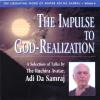
This excerpt is track 1 of the CD, The Impulse to God-Realization, a collection of talks focusing on Adi Da's clarifying Wisdom on the Impulse to Realize God that is inherent in all beings, and His Divine Offering and Instruction on the Ultimate Means to cultivate this heart-Impulse, thereby allowing it to become the guiding force of one's entire life.
The album is available through iTunes and The Dawn Horse Press.
This selection of Talks by Avatar Adi Da Samraj focuses on His clarifying Wisdom on the Impulse (inherent in all beings) to Realize God, and His Divine Offering and Instruction on the Ultimate Means to cultivate this heart-Impulse, thereby allowing it be the guiding force of one's entire life. As Avatar Adi Da points out, the real Spiritual Process cannot be truly initiated until and unless one’s Impulse to God-Realization becomes the governing principle of one's life.
The full talk, "The Grace of Suffering", is available on the CD, The Grace of Suffering, and on DVD as Volume 2 of the 25th Anniversary DVD Series.
Note: Due to distribution policies set by CDBaby (and beyond the control of this website and Adidam), this video may not be playable in every country. However, sometimes, even when you can't play it on this page, you may be able to play it on YouTube: click here.
"The Grace of Suffering" is a beautiful talk by Adi Da. But it IS very compressed, making quite a few points in a short space, and depending to a significant degree on a familiarity with Adi Da's spiritual teaching. Here are some notes that may help.
Throughout the talk, the technical term, "sadhana" (spiritual practice), is used.
Genuine spiritual practice is not about belief systems, mere rituals, or a little "peace of mind", but rather about actually locating the Divine, through the tangible Transmission of the Spiritual Master.
After a recent illness, a devotee mentions to Adi Da that he notices how the physical suffering of illness was distracting enough that he was not "able" to find Adi Da's Transmission when he is ill.
Adi Da acknowledges this, and responds with three more general points.
1. The illness didn't "make" the devotee lose the thread of practice; rather, he allowed himself to be distracted from God by the illness. When the devotee gets this, and sees how he himself is "doing" the turning away, he'll be able to "do better next time" by not turning away even when ill.
2. Until Divine Enlightenment — in other words, until there is no limit on one's spiritual practice — sadhana (spiritual practice) is always only reflecting back to devotees the remaining limits in their practice: where they are still turning away from the Divine, where they still need to become responsible for not turning away.
In the beginning, the "turning away" is very "crude": even mere physical suffering is enough to distract one from God. (If we find ourselves saying, "what do you mean, MERE physical suffering?" that definitely identifies us as spiritual beginners! :-) ) But as one grows in practice, and ceases to turn away in such a crude manner (as one becomes a "saint", "yogi", "sage", etc.), one discovers that one is still turning from the Divine at an even subtler level of the being (in the mind, the psyche, etc.)
It is only when that "turning away" has been inspected, understood, and transcended in every dimension of the being that Divine Realization occurs.
In this sense, for the genuine spiritual practitioner, physical suffering — along with every other circumstance that reveals to us our turning away from the Divine — is truly a Grace, enabling us to grow in our practice.
3. Where we are turning away is a reflection of what we are identifying with: the body, the mind, the soul, etc. (For example, if physical illness is enough to distract us from God, then the physical body is what we currently are identified with.) God-Realization only occurs when all "identities" less than God are understood and transcended.
In this sense, "there are no winners in God" — the Way is not about seeking, accomplishment, or winning, but rather about surrender to God, sacrifice of self, and ego-death. There's no "one" left to "win"! But the One Who Remains is perfectly, eternally happy.
Tags: CD
James Steinberg is interviewed on the podcast, Vajra Body Vajra Mind. Vajra Body Vajra Mind is a provocative podcast that explores the outer limits of spiritual practice and human development. James Steinberg is a longtime devotee of Adi Da, and the author of Divine Distraction and Love of the God-Man
 .
.
In this episode of Vajra Body Vajra Mind, we discuss James' life with Adi Da. We talk about the practice of Guru Yoga, challenges in reading Adi Da's Teaching, anti-Guru sentiment in contemporary culture, sexuality in spirituality, the importance of discipline in the Way of Adidam, the unique Transmission of Adi Da's Revelation and Presence (through photographs, videos, Image-Art, etc), resistance to the Guru by the ego, positive disillusionment (aka "the Lesson of Life"), and more.
 and Love of the God-Man
 .
.In this episode of Vajra Body Vajra Mind, we discuss James' life with Adi Da. We talk about the practice of Guru Yoga, challenges in reading Adi Da's Teaching, anti-Guru sentiment in contemporary culture, sexuality in spirituality, the importance of discipline in the Way of Adidam, the unique Transmission of Adi Da's Revelation and Presence (through photographs, videos, Image-Art, etc), resistance to the Guru by the ego, positive disillusionment (aka "the Lesson of Life"), and more.
This album of Adidam devotional music from The First Amendment Choir was originally released on audiocassette tape in 1981. (The name, "First Amendment Choir", was chosen for the choir by Adi Da, which performed for Him on several occasions.)
The album begins and ends with "The Divine Invocation":
Radiant Da,
All-Pervading Current of Life,
Consciousness where I appear and disappear,
Hear My Breathing Heart.
Awaken me
To feel the Heart of Light and Love,
Where this life and mind and body may dissolve.
I hold up my hands.
"The Divine Invocation" was an early version of what we now call The First Great Invocation. Now we would begin with the First Great Invocation and end with the Second Great Invocation — but Adi Da had not yet created the Second Great Invocation at the time this album was created.
Many of the songs on this album were composed by Billboard Award-winning composer Ray Lynch or by JoAnne Sunshine. Ray Lynch is also the guitar player. Eric Leber is the choir director. Besides Ray Lynch and JoAnne Sunshine, vocalists include Brad Crawford, Robin Richardson, Kathleen Ewart, Sylvia Hayden, Carol Mabin, Janet Kopieki, Rita Gordon, Happy Hayden, Ginny Leber, Maggie Roberts, Lynzee Elze, Ron Guba, Steve Benson, Chris Cardullo, Phyllis Hyde, Karen Booth, and Antonina Randazzo (among others). The album was recorded at Prune Production Studio, in Mill Valley, California, and was released by the Laughing Man Institute.
The volume is low, so you may need to turn it up. The sound quality of this digital version is not up to contemporary standards, but many listeners — old and new — may find it just as heart-moving now as so many found it when it was originally released.
Tags: music

The album begins and ends with "The Divine Invocation":
Radiant Da,
All-Pervading Current of Life,
Consciousness where I appear and disappear,
Hear My Breathing Heart.
Awaken me
To feel the Heart of Light and Love,
Where this life and mind and body may dissolve.
I hold up my hands.
"The Divine Invocation" was an early version of what we now call The First Great Invocation. Now we would begin with the First Great Invocation and end with the Second Great Invocation — but Adi Da had not yet created the Second Great Invocation at the time this album was created.
Many of the songs on this album were composed by Billboard Award-winning composer Ray Lynch or by JoAnne Sunshine. Ray Lynch is also the guitar player. Eric Leber is the choir director. Besides Ray Lynch and JoAnne Sunshine, vocalists include Brad Crawford, Robin Richardson, Kathleen Ewart, Sylvia Hayden, Carol Mabin, Janet Kopieki, Rita Gordon, Happy Hayden, Ginny Leber, Maggie Roberts, Lynzee Elze, Ron Guba, Steve Benson, Chris Cardullo, Phyllis Hyde, Karen Booth, and Antonina Randazzo (among others). The album was recorded at Prune Production Studio, in Mill Valley, California, and was released by the Laughing Man Institute.
The volume is low, so you may need to turn it up. The sound quality of this digital version is not up to contemporary standards, but many listeners — old and new — may find it just as heart-moving now as so many found it when it was originally released.
Tags: music
In 1986, Adi Da made His first visit to the European community of His devotees. He travelled through England, France and Holland. In the South of Holland, in the village of Maria Hoop close to the German border, a former Catholic monastery was found which could be rented for a few weeks. Devotees swiftly cleaned buildings and the grounds. Adi Da stayed in a specially prepared wing of the monastery for several days. During this time, He granted Darshan and held "Question and Answer" occasions in the chapel (now called Adi Da Kapel) with German, English, Dutch, French and American devotees. The former monastery has since been acquired by the European community of Adidam and is now known as The European Danda.
In this rare, never before published excerpt from one of the "Question and Answer" occasions, Adi Da addresses the primal human emotion of doubt in a most direct and simple manner. He describes how doubt is not ultimately a sign that we have been "betrayed" in some way. The radical solution to doubt is to identify with the Divine Itself, beyond the temporary cycles of the body and mind and beyond the sense of being a separate self.
Tags: European Danda

In this rare, never before published excerpt from one of the "Question and Answer" occasions, Adi Da addresses the primal human emotion of doubt in a most direct and simple manner. He describes how doubt is not ultimately a sign that we have been "betrayed" in some way. The radical solution to doubt is to identify with the Divine Itself, beyond the temporary cycles of the body and mind and beyond the sense of being a separate self.
Tags: European Danda
Adi Da communicates esoteric secrets about the nature of His Divine Incarnation, at The Mountain Of Attention Sanctuary in 1988.
A "human being" is comprised of a gross personality (a physical body) and a deeper personality (a subtle body), both arising in the Divine Consciousness.
In most human beings, when the physical body dies, the deeper personality reincarnates, associating itself with a new physical body.
In the extraordinarily rare case of a Divine Incarnation, the physical body of a great Spiritual Realizer dies, and the deeper personality is so profoundly submitted to the Divine that the Divine is able to incarnate through that deeper personality. Such an extraordinary vehicle was provided to Adi Da through Swami Vivekananda and Sri Ramakrishna, upon the death of Swami Vivekananda in 1902.
While all beings arise in the Divine, most people live completely unconscious of their Source, and even great Spiritual Realizers are aware of (and are lived by and as) the Divine only to a certain degree. In the rare case of a Divine Incarnation, the Divine is consciously animating the gross and deeper personalities of the human being, and progressively conforms the gross and deeper personalities to Itself completely, over the lifetime of these vehicles.
In the course of fully preparing His human Incarnation for its Divine Purpose of Awakening all beings, Adi Da needed to completely conform the "gross personality" (the physical vehicle) and completely transcend all remaining limitations in the deeper personality, to the point where "there's nothing left of the gross or the deeper personality but the ash".

A "human being" is comprised of a gross personality (a physical body) and a deeper personality (a subtle body), both arising in the Divine Consciousness.
In most human beings, when the physical body dies, the deeper personality reincarnates, associating itself with a new physical body.
In the extraordinarily rare case of a Divine Incarnation, the physical body of a great Spiritual Realizer dies, and the deeper personality is so profoundly submitted to the Divine that the Divine is able to incarnate through that deeper personality. Such an extraordinary vehicle was provided to Adi Da through Swami Vivekananda and Sri Ramakrishna, upon the death of Swami Vivekananda in 1902.
While all beings arise in the Divine, most people live completely unconscious of their Source, and even great Spiritual Realizers are aware of (and are lived by and as) the Divine only to a certain degree. In the rare case of a Divine Incarnation, the Divine is consciously animating the gross and deeper personalities of the human being, and progressively conforms the gross and deeper personalities to Itself completely, over the lifetime of these vehicles.
In the course of fully preparing His human Incarnation for its Divine Purpose of Awakening all beings, Adi Da needed to completely conform the "gross personality" (the physical vehicle) and completely transcend all remaining limitations in the deeper personality, to the point where "there's nothing left of the gross or the deeper personality but the ash".
In this excerpt from the double CD, The Grace of Turning to Me, Adi Da describes how "turning to Him" — the moment-to-moment turning of the faculties of the body-mind to Him — must be based on the Graceful recognition of Him as the Divine and response to Him based on that recognition.
On this double CD, Adi Da uses every Compassionate Means in His Manner — sometimes Humorous, sometimes Fiery — to Call His devotees, again and again, to be sensitive to the Grace-Given and spontaneous heart-Attraction to Him, and thereby turn to Him, the Divine in human Form — rather than to the endless content of the body-mind, which only reinforces egoic bondage and the illusion of separateness. In this way, Avatar Adi Da Masterfully Reveals the secret of True Liberation in His Avataric Divine Company.
The talks on this double CD were drawn from Avataric Discourses that took place in 2004.
Tags: avataric discourse CD
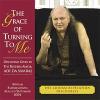
On this double CD, Adi Da uses every Compassionate Means in His Manner — sometimes Humorous, sometimes Fiery — to Call His devotees, again and again, to be sensitive to the Grace-Given and spontaneous heart-Attraction to Him, and thereby turn to Him, the Divine in human Form — rather than to the endless content of the body-mind, which only reinforces egoic bondage and the illusion of separateness. In this way, Avatar Adi Da Masterfully Reveals the secret of True Liberation in His Avataric Divine Company.
The talks on this double CD were drawn from Avataric Discourses that took place in 2004.
Tags: avataric discourse CD
In this excerpt from an Avataric Discourse given at The Mountain Of Attention in early 2006, Adi Da responds to a devotee's question about the difference between sixth stage and seventh stage non-dual Realization. He also distinguishes between the "imperfect" sixth stage practices in the Great Tradition, that involve the body-mind in a conditional activity of turning the faculties to Consciousness Itself; and the Perfect Practice of the Way of Adidam, which does not involve the body-mind at all, but involves a Self-Abiding in Consciousness Itself that is an Acausal Gift of the Divine.
Tags: Avataric Discourse

Tags: Avataric Discourse
[Contains Dutch subtitles. For the version without subtitles, click here.]
Adi Da: "Sex is fundamental ego-identity, lived. And generally speaking, it is a problem for everyone. . . The social pattern of 'self' and 'other' is founded upon emotional-sexual patterning to a very great degree. . . So it certainly is an important dimension of bondage, and therefore an important aspect of sadhana. The Perfect Practice is not based on any reference to the body-mind, or any method of the body-mind."
In this Avataric Discourse (from January 21, 2005), Adi Da explains why the Perfect Practice (the most advanced development of the Way of Adidam) has nothing to do with sex (or the ego-"I" altogether), and is not a "method" of the body-mind or something to be applied to the body-mind. The Self-Condition prior to the body-mind is the domain of the Perfect Practice. The Self-Condition is not a separate "self", but the Nirvanic Condition that is always already the case, and that inherently transcends the body-mind.
This excerpt is from the DVD, Beyond Sex, Science, and self. Subtitles in English, Spanish, French, Italian, German, Dutch, Russian, Polish, Czech, and Hebrew. A CD version is also available.
Tags: Avataric Discourse Perfect Practice DVD CD Dutch

Adi Da: "Sex is fundamental ego-identity, lived. And generally speaking, it is a problem for everyone. . . The social pattern of 'self' and 'other' is founded upon emotional-sexual patterning to a very great degree. . . So it certainly is an important dimension of bondage, and therefore an important aspect of sadhana. The Perfect Practice is not based on any reference to the body-mind, or any method of the body-mind."
In this Avataric Discourse (from January 21, 2005), Adi Da explains why the Perfect Practice (the most advanced development of the Way of Adidam) has nothing to do with sex (or the ego-"I" altogether), and is not a "method" of the body-mind or something to be applied to the body-mind. The Self-Condition prior to the body-mind is the domain of the Perfect Practice. The Self-Condition is not a separate "self", but the Nirvanic Condition that is always already the case, and that inherently transcends the body-mind.
This excerpt is from the DVD, Beyond Sex, Science, and self. Subtitles in English, Spanish, French, Italian, German, Dutch, Russian, Polish, Czech, and Hebrew. A CD version is also available.
Tags: Avataric Discourse Perfect Practice DVD CD Dutch
Adi Da criticized religious cultism, long before the subject gained any popular attention. (For an audio clip of His earliest criticisms — in June, 1972 — click here.) This discourse, given in 1978 at The Mountain Of Attention, is one of His summary addresses on the subject. Adi Da observes that the primary characteristic of a cult member is shared enthusiasm (like enjoying the energy of the crowd at a football game). For example, in "the cult of the Spiritual Master", everybody is enjoying the enthusiasm (their own and each other's) associated with having "found" the great Master; but no one is actually engaged in significant deepening of the devotional and spiritual relationship with the Master, and practicing on that basis — hence no Spiritual growth or Realization occurs.
Adi Da: "My purpose in My Teaching is to make it possible for you to duplicate what I have done — not to be eternally separated from Me, but to be in Communion with Me — to be intimate with Me in Spiritual terms, so that you, yourself, may live this practice, and fulfill it in your own case."
Tags: cult
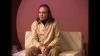
Adi Da: "My purpose in My Teaching is to make it possible for you to duplicate what I have done — not to be eternally separated from Me, but to be in Communion with Me — to be intimate with Me in Spiritual terms, so that you, yourself, may live this practice, and fulfill it in your own case."
Tags: cult
Adi Da: "Sex is fundamental ego-identity, lived. And generally speaking, it is a problem for everyone. . . The social pattern of 'self' and 'other' is founded upon emotional-sexual patterning to a very great degree. . . So it certainly is an important dimension of bondage, and therefore an important aspect of sadhana. The Perfect Practice is not based on any reference to the body-mind, or any method of the body-mind."
In this Avataric Discourse (from January 21, 2005), Adi Da explains why the Perfect Practice (the most advanced development of the Way of Adidam) has nothing to do with sex (or the ego-"I" altogether), and is not a "method" of the body-mind or something to be applied to the body-mind. The Self-Condition prior to the body-mind is the domain of the Perfect Practice. The Self-Condition is not a separate "self", but the Nirvanic Condition that is always already the case, and that inherently transcends the body-mind.
This excerpt is from the DVD, Beyond Sex, Science, and self. Subtitles in English, Spanish, French, Italian, German, Dutch, Russian, Polish, Czech, and Hebrew. A CD version is also available.
Tags: Avataric Discourse Perfect Practice DVD CD

In this Avataric Discourse (from January 21, 2005), Adi Da explains why the Perfect Practice (the most advanced development of the Way of Adidam) has nothing to do with sex (or the ego-"I" altogether), and is not a "method" of the body-mind or something to be applied to the body-mind. The Self-Condition prior to the body-mind is the domain of the Perfect Practice. The Self-Condition is not a separate "self", but the Nirvanic Condition that is always already the case, and that inherently transcends the body-mind.
This excerpt is from the DVD, Beyond Sex, Science, and self. Subtitles in English, Spanish, French, Italian, German, Dutch, Russian, Polish, Czech, and Hebrew. A CD version is also available.
Tags: Avataric Discourse Perfect Practice DVD CD
In this 1982 talk (available on the CD, The Cosmic Mandala), Adi Da speaks about what is required — in the death process, and in life — in order to transcend the mechanism of attention and Realize the Divine Self-Condition.
In this talk excerpt, Adi Da tells us that, to Realize permanent Happiness, we can make use of the natural motivation toward release from un-happiness.
In the death process, He recommends engaging the discipline of relaxation and release of the hold on body, mind, and all states of attention, thereby surrendering and transcending fear.
Tags: death CD
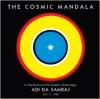
In this talk excerpt, Adi Da tells us that, to Realize permanent Happiness, we can make use of the natural motivation toward release from un-happiness.
In the death process, He recommends engaging the discipline of relaxation and release of the hold on body, mind, and all states of attention, thereby surrendering and transcending fear.
Tags: death CD
Excerpt from the Avataric Discourse of August 23, 2004 at Adi Da Samrajashram.
Adi Da explains how ordinary meditation techniques accomplish nothing more than relaxation. They don't touch the egoic identification with the body-mind. Only the Way of Adidam (practiced in every detail) does that. Practice of the Way of Adidam does not require one to stop fear (which continues to serve a useful, practical role for the survival of the body-mind). But in every moment of real practice of the Way of Adidam, one is released from identification with the body-mind, and so one is not bound by any fear the body-mind may be experiencing.
Tags: Avataric Discourse

Adi Da explains how ordinary meditation techniques accomplish nothing more than relaxation. They don't touch the egoic identification with the body-mind. Only the Way of Adidam (practiced in every detail) does that. Practice of the Way of Adidam does not require one to stop fear (which continues to serve a useful, practical role for the survival of the body-mind). But in every moment of real practice of the Way of Adidam, one is released from identification with the body-mind, and so one is not bound by any fear the body-mind may be experiencing.
Tags: Avataric Discourse
A devotee reads an excerpt from Adi Da's essay, "Searchless, Lawful Management of the Body", from the book, Green Gorilla.
In this essay, Adi Da addresses "lawfulness" in relation to diet, in contrast to the fascinated preoccupation with food that characterizes people in the modern world. This preoccupation is based in the egoic search for fun and pleasure, and inevitably results in suffering and pain. The lawful diet is not an end in itself, but a simple, ordinary practice that establishes "the 'position' of well-being of the body" and is part of a larger practice of what Adi Da calls "right life".
For more on this topic (as well as the text of the complete essay, "Searchless, Lawful Management of the Body"), read the Adidam Revelation Magazine's article, Searchless, Lawful Management of the Body. Further excerpts from Green Goriila can be found here.
Tags: Green Gorilla diet
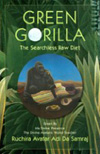
In this essay, Adi Da addresses "lawfulness" in relation to diet, in contrast to the fascinated preoccupation with food that characterizes people in the modern world. This preoccupation is based in the egoic search for fun and pleasure, and inevitably results in suffering and pain. The lawful diet is not an end in itself, but a simple, ordinary practice that establishes "the 'position' of well-being of the body" and is part of a larger practice of what Adi Da calls "right life".
For more on this topic (as well as the text of the complete essay, "Searchless, Lawful Management of the Body"), read the Adidam Revelation Magazine's article, Searchless, Lawful Management of the Body. Further excerpts from Green Goriila can be found here.
Tags: Green Gorilla diet

The full talk is available on the CD, The Grace of Suffering, and on DVD as Volume 2 of the 25th Anniversary DVD Series.
Tags: CD DVD
Audio/Video Links:


Most Popular Categories:
- Adi Da's Talks (463)
- Devotees' Stories of Adi Da (150)
- Adi Da's Image-Art (68)
- Not-Two Is Peace (54)
- Formal Darshan Occasions (36)
- Adi Da's Poetry (11)
- Tribute to Adi Da's Life and Work (11)
- Avataric Discourses: 2004 - 2005 (196)
- DVDs (198) / CDs (240) from the Dawn Horse Press
- Multi-Part Series (67)