Adi Da Up Close
Audio/Video Library
Our multimedia library currently contains 1,023 YouTube video clips and audio clips about (or related to) Adi Da and Adidam.


[Contains Czech subtitles. If the CC icon ("Subtitles/closed captions") has a red line under it, the subtitles should appear. If you don't see them, just press the CC icon to turn them on.]
V hovorech z r. 2005 mluví Adi Da Samráj o tom, že se osvícení nikdy nedá dosáhnout prostřednictvím vědy nebo konvenčního náboženství.
"Nevidíte místnost tak, jaká je" ("You Do Not See The Room As It Is") is a video excerpt from an Avataric Discourse given by Adi Da at Adi Da Samrajashram, on January 21, 2005. The Avataric Discourse is available on the DVD, Beyond Sex, Science, and self.
In this Discourse, Adi Da explains why Liberation cannot ever be achieved through science or conventional religion.
Tags: Avataric Discourse Czech DVD

V hovorech z r. 2005 mluví Adi Da Samráj o tom, že se osvícení nikdy nedá dosáhnout prostřednictvím vědy nebo konvenčního náboženství.
"Nevidíte místnost tak, jaká je" ("You Do Not See The Room As It Is") is a video excerpt from an Avataric Discourse given by Adi Da at Adi Da Samrajashram, on January 21, 2005. The Avataric Discourse is available on the DVD, Beyond Sex, Science, and self.
In this Discourse, Adi Da explains why Liberation cannot ever be achieved through science or conventional religion.
Tags: Avataric Discourse Czech DVD
[Contains Finnish subtitles. If the CC icon ("Subtitles/closed captions") has a red line under it, the subtitles should appear. If you don't see them, just press the CC icon to turn them on.]
"Onko Muurahaisella Egoa?" ("Is an ant an ego?") is a video excerpt from a humorous and profoundly insightful Avataric Discourse (given by Adi Da on October 20, 2004 at Adi Da Samrajashram), Adi Da considers the difference between self-consciousness and egoity, referring to both humans and non-humans (including dogs, ants, and trees).
ADI DA: [Laughs] You generally attribute egoity to human beings, but you wonder about everything else. For instance, what about not something relatively inert like a rug or even just standing there and not seeming to be particularly responsive, like a tree. But what about a dog? Is a dog, do you think dogs are egos when you see them, just as readily as you think of human beings as egos? But, why do you draw the line? I mean how far does it go? Where do you stop thinking of living entities, at least, as egos? Do you just presume everything bigger than a cricket is an ego? Or is everything that moves in your, from your perspective experientially or in your natural presumptions, how far do, does the fact of egoity extend in your presumption.
Well, is an ant an ego in your presumption?
The word “ego” is actually a Greek word which means “I”. I consider it with you and talk about it in terms of self-contraction and so forth, but, so that’s the elaboration on its meaning, but the word simply means “I” which means the reference, self-reference, the reflexive, reflexive pronoun as it’s called of self-reference. So, does an ant feel self-referential?
You observe them protecting themselves and struggling with others. Couldn’t do so without some kind of self-consciousness, could it? So, you naturally presume that even something like an ant is, is a self, an ego, self-aware. Does something have to move from its spatial location? Does it have to be able to take a walk or, such as an ant or a human being, or can a tree? Does a tree have self-consciousness, exhibit self-consciousness. . .
What about trees? They are entities with apparent self-consciousness of a kind. They are in that sense, egos. But are they egoic? Are they functioning egoically? Are they feeling that they are in bondage and moved to seek as human beings are and as you feel in your own case, you see? Trees don’t seem to behave, generally speaking, in quite that way. They are self-conscious as organisms, but they don’t seem to be particularly disturbed about being trees. They seem more characterized by some kind of contemplation in which they don’t feel disturbed.
But if you observe non-humans, virtually all of them show signs of setting themselves apart and entering into a contemplative state that resembles some kind of a samadhi or meditative condition.
Why do you think human beings are disturbed? You see, why is human egoity what it is? If you observe how it appears in evidence in non-humans, suggests that human beings are the way they are because they’re confined, and not just confined by walls and bars. Some people are, and they get very disturbed there, and walk back and forth or get catatonic.
Your bondage is your own activity, and it also extends from conditions. Conditions can reinforce or seem to justify self-contraction. But still what you’re suffering is self-contraction itself.
So, human beings are actually confined, and they are self-confined, and otherwise, also, living in various modes and degrees of confinement by conditions of life and in fact, human beings feel confined by bodily existence, because however healthy you may be at the moment, you know you’re going to die, and are potentially, potentially, you could suffer any number of great happenings. And you anticipate that inevitably, you will, sooner or later, experience some fundamental difficulties that you would prefer not to have to endure, including disease and death.
Well, everything that’s physically living is going to die. The trouble, the difference is does it drive you crazy, make you seek, or are you at ease, because you haven’t lost touch with what transcends that possibility?
Tags: Avataric Discourse Finnish

"Onko Muurahaisella Egoa?" ("Is an ant an ego?") is a video excerpt from a humorous and profoundly insightful Avataric Discourse (given by Adi Da on October 20, 2004 at Adi Da Samrajashram), Adi Da considers the difference between self-consciousness and egoity, referring to both humans and non-humans (including dogs, ants, and trees).
ADI DA: [Laughs] You generally attribute egoity to human beings, but you wonder about everything else. For instance, what about not something relatively inert like a rug or even just standing there and not seeming to be particularly responsive, like a tree. But what about a dog? Is a dog, do you think dogs are egos when you see them, just as readily as you think of human beings as egos? But, why do you draw the line? I mean how far does it go? Where do you stop thinking of living entities, at least, as egos? Do you just presume everything bigger than a cricket is an ego? Or is everything that moves in your, from your perspective experientially or in your natural presumptions, how far do, does the fact of egoity extend in your presumption.
Well, is an ant an ego in your presumption?
The word “ego” is actually a Greek word which means “I”. I consider it with you and talk about it in terms of self-contraction and so forth, but, so that’s the elaboration on its meaning, but the word simply means “I” which means the reference, self-reference, the reflexive, reflexive pronoun as it’s called of self-reference. So, does an ant feel self-referential?
You observe them protecting themselves and struggling with others. Couldn’t do so without some kind of self-consciousness, could it? So, you naturally presume that even something like an ant is, is a self, an ego, self-aware. Does something have to move from its spatial location? Does it have to be able to take a walk or, such as an ant or a human being, or can a tree? Does a tree have self-consciousness, exhibit self-consciousness. . .
What about trees? They are entities with apparent self-consciousness of a kind. They are in that sense, egos. But are they egoic? Are they functioning egoically? Are they feeling that they are in bondage and moved to seek as human beings are and as you feel in your own case, you see? Trees don’t seem to behave, generally speaking, in quite that way. They are self-conscious as organisms, but they don’t seem to be particularly disturbed about being trees. They seem more characterized by some kind of contemplation in which they don’t feel disturbed.
But if you observe non-humans, virtually all of them show signs of setting themselves apart and entering into a contemplative state that resembles some kind of a samadhi or meditative condition.
Why do you think human beings are disturbed? You see, why is human egoity what it is? If you observe how it appears in evidence in non-humans, suggests that human beings are the way they are because they’re confined, and not just confined by walls and bars. Some people are, and they get very disturbed there, and walk back and forth or get catatonic.
Your bondage is your own activity, and it also extends from conditions. Conditions can reinforce or seem to justify self-contraction. But still what you’re suffering is self-contraction itself.
So, human beings are actually confined, and they are self-confined, and otherwise, also, living in various modes and degrees of confinement by conditions of life and in fact, human beings feel confined by bodily existence, because however healthy you may be at the moment, you know you’re going to die, and are potentially, potentially, you could suffer any number of great happenings. And you anticipate that inevitably, you will, sooner or later, experience some fundamental difficulties that you would prefer not to have to endure, including disease and death.
Well, everything that’s physically living is going to die. The trouble, the difference is does it drive you crazy, make you seek, or are you at ease, because you haven’t lost touch with what transcends that possibility?
Tags: Avataric Discourse Finnish
[Contains Spanish subtitles. If the CC icon ("Subtitles/closed captions") has a red line under it, the subtitles should appear. If you don't see them, just press the CC icon to turn them on.]
"żEs una Hormiga un Ego?" ("Is an ant an ego?") is a video excerpt from a humorous and profoundly insightful Avataric Discourse (given by Adi Da on October 20, 2004 at Adi Da Samrajashram), Adi Da considers the difference between self-consciousness and egoity, referring to both humans and non-humans (including dogs, ants, and trees).
ADI DA: [Laughs] You generally attribute egoity to human beings, but you wonder about everything else. For instance, what about not something relatively inert like a rug or even just standing there and not seeming to be particularly responsive, like a tree. But what about a dog? Is a dog, do you think dogs are egos when you see them, just as readily as you think of human beings as egos? But, why do you draw the line? I mean how far does it go? Where do you stop thinking of living entities, at least, as egos? Do you just presume everything bigger than a cricket is an ego? Or is everything that moves in your, from your perspective experientially or in your natural presumptions, how far do, does the fact of egoity extend in your presumption.
Well, is an ant an ego in your presumption?
The word “ego” is actually a Greek word which means “I”. I consider it with you and talk about it in terms of self-contraction and so forth, but, so that’s the elaboration on its meaning, but the word simply means “I” which means the reference, self-reference, the reflexive, reflexive pronoun as it’s called of self-reference. So, does an ant feel self-referential?
You observe them protecting themselves and struggling with others. Couldn’t do so without some kind of self-consciousness, could it? So, you naturally presume that even something like an ant is, is a self, an ego, self-aware. Does something have to move from its spatial location? Does it have to be able to take a walk or, such as an ant or a human being, or can a tree? Does a tree have self-consciousness, exhibit self-consciousness. . .
What about trees? They are entities with apparent self-consciousness of a kind. They are in that sense, egos. But are they egoic? Are they functioning egoically? Are they feeling that they are in bondage and moved to seek as human beings are and as you feel in your own case, you see? Trees don’t seem to behave, generally speaking, in quite that way. They are self-conscious as organisms, but they don’t seem to be particularly disturbed about being trees. They seem more characterized by some kind of contemplation in which they don’t feel disturbed.
But if you observe non-humans, virtually all of them show signs of setting themselves apart and entering into a contemplative state that resembles some kind of a samadhi or meditative condition.
Why do you think human beings are disturbed? You see, why is human egoity what it is? If you observe how it appears in evidence in non-humans, suggests that human beings are the way they are because they’re confined, and not just confined by walls and bars. Some people are, and they get very disturbed there, and walk back and forth or get catatonic.
Your bondage is your own activity, and it also extends from conditions. Conditions can reinforce or seem to justify self-contraction. But still what you’re suffering is self-contraction itself.
So, human beings are actually confined, and they are self-confined, and otherwise, also, living in various modes and degrees of confinement by conditions of life and in fact, human beings feel confined by bodily existence, because however healthy you may be at the moment, you know you’re going to die, and are potentially, potentially, you could suffer any number of great happenings. And you anticipate that inevitably, you will, sooner or later, experience some fundamental difficulties that you would prefer not to have to endure, including disease and death.
Well, everything that’s physically living is going to die. The trouble, the difference is does it drive you crazy, make you seek, or are you at ease, because you haven’t lost touch with what transcends that possibility?
Tags: Avataric Discourse Spanish

"żEs una Hormiga un Ego?" ("Is an ant an ego?") is a video excerpt from a humorous and profoundly insightful Avataric Discourse (given by Adi Da on October 20, 2004 at Adi Da Samrajashram), Adi Da considers the difference between self-consciousness and egoity, referring to both humans and non-humans (including dogs, ants, and trees).
ADI DA: [Laughs] You generally attribute egoity to human beings, but you wonder about everything else. For instance, what about not something relatively inert like a rug or even just standing there and not seeming to be particularly responsive, like a tree. But what about a dog? Is a dog, do you think dogs are egos when you see them, just as readily as you think of human beings as egos? But, why do you draw the line? I mean how far does it go? Where do you stop thinking of living entities, at least, as egos? Do you just presume everything bigger than a cricket is an ego? Or is everything that moves in your, from your perspective experientially or in your natural presumptions, how far do, does the fact of egoity extend in your presumption.
Well, is an ant an ego in your presumption?
The word “ego” is actually a Greek word which means “I”. I consider it with you and talk about it in terms of self-contraction and so forth, but, so that’s the elaboration on its meaning, but the word simply means “I” which means the reference, self-reference, the reflexive, reflexive pronoun as it’s called of self-reference. So, does an ant feel self-referential?
You observe them protecting themselves and struggling with others. Couldn’t do so without some kind of self-consciousness, could it? So, you naturally presume that even something like an ant is, is a self, an ego, self-aware. Does something have to move from its spatial location? Does it have to be able to take a walk or, such as an ant or a human being, or can a tree? Does a tree have self-consciousness, exhibit self-consciousness. . .
What about trees? They are entities with apparent self-consciousness of a kind. They are in that sense, egos. But are they egoic? Are they functioning egoically? Are they feeling that they are in bondage and moved to seek as human beings are and as you feel in your own case, you see? Trees don’t seem to behave, generally speaking, in quite that way. They are self-conscious as organisms, but they don’t seem to be particularly disturbed about being trees. They seem more characterized by some kind of contemplation in which they don’t feel disturbed.
But if you observe non-humans, virtually all of them show signs of setting themselves apart and entering into a contemplative state that resembles some kind of a samadhi or meditative condition.
Why do you think human beings are disturbed? You see, why is human egoity what it is? If you observe how it appears in evidence in non-humans, suggests that human beings are the way they are because they’re confined, and not just confined by walls and bars. Some people are, and they get very disturbed there, and walk back and forth or get catatonic.
Your bondage is your own activity, and it also extends from conditions. Conditions can reinforce or seem to justify self-contraction. But still what you’re suffering is self-contraction itself.
So, human beings are actually confined, and they are self-confined, and otherwise, also, living in various modes and degrees of confinement by conditions of life and in fact, human beings feel confined by bodily existence, because however healthy you may be at the moment, you know you’re going to die, and are potentially, potentially, you could suffer any number of great happenings. And you anticipate that inevitably, you will, sooner or later, experience some fundamental difficulties that you would prefer not to have to endure, including disease and death.
Well, everything that’s physically living is going to die. The trouble, the difference is does it drive you crazy, make you seek, or are you at ease, because you haven’t lost touch with what transcends that possibility?
Tags: Avataric Discourse Spanish
This is a video excerpt from an Avataric Discourse given by Adi Da at Adi Da Samrajashram, on January 21, 2005. The Avataric Discourse is available on the DVD, Beyond Sex, Science, and self.
In this Discourse, Adi Da explains why Liberation cannot ever be achieved through science or conventional religion.
Tags: DVD Avataric Discourse
In this Discourse, Adi Da explains why Liberation cannot ever be achieved through science or conventional religion.
Tags: DVD Avataric Discourse
[Contains Italian subtitles. If the CC icon ("Subtitles/closed captions") has a red line under it, the subtitles should appear. If you don't see them, just press the CC icon to turn them on.]
"Le formiche hanno un ego" ("Ants have an ego") is a video excerpt from a humorous and profoundly insightful Avataric Discourse (given by Adi Da on October 20, 2004 at Adi Da Samrajashram), Adi Da considers the difference between self-consciousness and egoity, referring to both humans and non-humans (including dogs, ants, and trees).
ADI DA: [Laughs] You generally attribute egoity to human beings, but you wonder about everything else. For instance, what about not something relatively inert like a rug or even just standing there and not seeming to be particularly responsive, like a tree. But what about a dog? Is a dog, do you think dogs are egos when you see them, just as readily as you think of human beings as egos? But, why do you draw the line? I mean how far does it go? Where do you stop thinking of living entities, at least, as egos? Do you just presume everything bigger than a cricket is an ego? Or is everything that moves in your, from your perspective experientially or in your natural presumptions, how far do, does the fact of egoity extend in your presumption.
Well, is an ant an ego in your presumption?
The word “ego” is actually a Greek word which means “I”. I consider it with you and talk about it in terms of self-contraction and so forth, but, so that’s the elaboration on its meaning, but the word simply means “I” which means the reference, self-reference, the reflexive, reflexive pronoun as it’s called of self-reference. So, does an ant feel self-referential?
You observe them protecting themselves and struggling with others. Couldn’t do so without some kind of self-consciousness, could it? So, you naturally presume that even something like an ant is, is a self, an ego, self-aware. Does something have to move from its spatial location? Does it have to be able to take a walk or, such as an ant or a human being, or can a tree? Does a tree have self-consciousness, exhibit self-consciousness. . .
What about trees? They are entities with apparent self-consciousness of a kind. They are in that sense, egos. But are they egoic? Are they functioning egoically? Are they feeling that they are in bondage and moved to seek as human beings are and as you feel in your own case, you see? Trees don’t seem to behave, generally speaking, in quite that way. They are self-conscious as organisms, but they don’t seem to be particularly disturbed about being trees. They seem more characterized by some kind of contemplation in which they don’t feel disturbed.
But if you observe non-humans, virtually all of them show signs of setting themselves apart and entering into a contemplative state that resembles some kind of a samadhi or meditative condition.
Why do you think human beings are disturbed? You see, why is human egoity what it is? If you observe how it appears in evidence in non-humans, suggests that human beings are the way they are because they’re confined, and not just confined by walls and bars. Some people are, and they get very disturbed there, and walk back and forth or get catatonic.
Your bondage is your own activity, and it also extends from conditions. Conditions can reinforce or seem to justify self-contraction. But still what you’re suffering is self-contraction itself.
So, human beings are actually confined, and they are self-confined, and otherwise, also, living in various modes and degrees of confinement by conditions of life and in fact, human beings feel confined by bodily existence, because however healthy you may be at the moment, you know you’re going to die, and are potentially, potentially, you could suffer any number of great happenings. And you anticipate that inevitably, you will, sooner or later, experience some fundamental difficulties that you would prefer not to have to endure, including disease and death.
Well, everything that’s physically living is going to die. The trouble, the difference is does it drive you crazy, make you seek, or are you at ease, because you haven’t lost touch with what transcends that possibility?
Tags: Avataric Discourse Italian

"Le formiche hanno un ego" ("Ants have an ego") is a video excerpt from a humorous and profoundly insightful Avataric Discourse (given by Adi Da on October 20, 2004 at Adi Da Samrajashram), Adi Da considers the difference between self-consciousness and egoity, referring to both humans and non-humans (including dogs, ants, and trees).
ADI DA: [Laughs] You generally attribute egoity to human beings, but you wonder about everything else. For instance, what about not something relatively inert like a rug or even just standing there and not seeming to be particularly responsive, like a tree. But what about a dog? Is a dog, do you think dogs are egos when you see them, just as readily as you think of human beings as egos? But, why do you draw the line? I mean how far does it go? Where do you stop thinking of living entities, at least, as egos? Do you just presume everything bigger than a cricket is an ego? Or is everything that moves in your, from your perspective experientially or in your natural presumptions, how far do, does the fact of egoity extend in your presumption.
Well, is an ant an ego in your presumption?
The word “ego” is actually a Greek word which means “I”. I consider it with you and talk about it in terms of self-contraction and so forth, but, so that’s the elaboration on its meaning, but the word simply means “I” which means the reference, self-reference, the reflexive, reflexive pronoun as it’s called of self-reference. So, does an ant feel self-referential?
You observe them protecting themselves and struggling with others. Couldn’t do so without some kind of self-consciousness, could it? So, you naturally presume that even something like an ant is, is a self, an ego, self-aware. Does something have to move from its spatial location? Does it have to be able to take a walk or, such as an ant or a human being, or can a tree? Does a tree have self-consciousness, exhibit self-consciousness. . .
What about trees? They are entities with apparent self-consciousness of a kind. They are in that sense, egos. But are they egoic? Are they functioning egoically? Are they feeling that they are in bondage and moved to seek as human beings are and as you feel in your own case, you see? Trees don’t seem to behave, generally speaking, in quite that way. They are self-conscious as organisms, but they don’t seem to be particularly disturbed about being trees. They seem more characterized by some kind of contemplation in which they don’t feel disturbed.
But if you observe non-humans, virtually all of them show signs of setting themselves apart and entering into a contemplative state that resembles some kind of a samadhi or meditative condition.
Why do you think human beings are disturbed? You see, why is human egoity what it is? If you observe how it appears in evidence in non-humans, suggests that human beings are the way they are because they’re confined, and not just confined by walls and bars. Some people are, and they get very disturbed there, and walk back and forth or get catatonic.
Your bondage is your own activity, and it also extends from conditions. Conditions can reinforce or seem to justify self-contraction. But still what you’re suffering is self-contraction itself.
So, human beings are actually confined, and they are self-confined, and otherwise, also, living in various modes and degrees of confinement by conditions of life and in fact, human beings feel confined by bodily existence, because however healthy you may be at the moment, you know you’re going to die, and are potentially, potentially, you could suffer any number of great happenings. And you anticipate that inevitably, you will, sooner or later, experience some fundamental difficulties that you would prefer not to have to endure, including disease and death.
Well, everything that’s physically living is going to die. The trouble, the difference is does it drive you crazy, make you seek, or are you at ease, because you haven’t lost touch with what transcends that possibility?
Tags: Avataric Discourse Italian
[Contains Finnish subtitles. If the CC icon ("Subtitles/closed captions") has a red line under it, the subtitles should appear. If you don't see them, just press the CC icon to turn them on.]
Tässä keskustelussa Adi Da käsittelee pelon perimmäistä olemusta.
"Meditaatiotekniikat Eivät Karkota Pelkoa" ("Meditation Techniques Don't Touch Fear") is a video excerpt from the Avataric Discourse of August 23, 2004 at Adi Da Samrajashram.
Adi Da explains how ordinary meditation techniques accomplish nothing more than relaxation. They don't touch the egoic identification with the body-mind. Only the Way of Adidam (practiced in every detail) does that. Practice of the Way of Adidam does not require one to stop fear (which continues to serve a useful, practical role for the survival of the body-mind). But in every moment of real practice of the Way of Adidam, one is released from identification with the body-mind, and so one is not bound by any fear the body-mind may be experiencing.
Tags: Avataric Discourse Finnish

Tässä keskustelussa Adi Da käsittelee pelon perimmäistä olemusta.
"Meditaatiotekniikat Eivät Karkota Pelkoa" ("Meditation Techniques Don't Touch Fear") is a video excerpt from the Avataric Discourse of August 23, 2004 at Adi Da Samrajashram.
Adi Da explains how ordinary meditation techniques accomplish nothing more than relaxation. They don't touch the egoic identification with the body-mind. Only the Way of Adidam (practiced in every detail) does that. Practice of the Way of Adidam does not require one to stop fear (which continues to serve a useful, practical role for the survival of the body-mind). But in every moment of real practice of the Way of Adidam, one is released from identification with the body-mind, and so one is not bound by any fear the body-mind may be experiencing.
Tags: Avataric Discourse Finnish
[Contains Polish subtitles. If the CC icon ("Subtitles/closed captions") has a red line under it, the subtitles should appear. If you don't see them, just press the CC icon to turn them on.]
W tym dyskursie z 2005 roku Adi Da Samraj mówi o tym, że Urzeczywistnienia nie można osiągnąć poprzez naukę lub konwencjonalną religię.
"Adidam nie jest religijną drogą" ("Adidam is not a religion") is a video excerpt from an Avataric Discourse, given by Adi Da on January 21, 2005, at Adi Da Samrajashram.
The full Discourse is available on the DVD, Beyond Sex, Science, and "self".
ADI DA: "Religion" belongs to a domain of efforts that are "point-of-view"-based, cosmological in nature, associated with myths of apparent Reality as perceived. None of that has anything to do with the Realization of Reality Itself.
Tags: Avataric Discourse Polish

W tym dyskursie z 2005 roku Adi Da Samraj mówi o tym, że Urzeczywistnienia nie można osiągnąć poprzez naukę lub konwencjonalną religię.
"Adidam nie jest religijną drogą" ("Adidam is not a religion") is a video excerpt from an Avataric Discourse, given by Adi Da on January 21, 2005, at Adi Da Samrajashram.
The full Discourse is available on the DVD, Beyond Sex, Science, and "self".
ADI DA: "Religion" belongs to a domain of efforts that are "point-of-view"-based, cosmological in nature, associated with myths of apparent Reality as perceived. None of that has anything to do with the Realization of Reality Itself.
Tags: Avataric Discourse Polish
[Contains Czech subtitles. If the CC icon ("Subtitles/closed captions") has a red line under it, the subtitles should appear. If you don't see them, just press the CC icon to turn them on.]
Toto video dokumentuje dvě důležité výstavy, na nichž byla vystavena díla Adi Da: Bienále v Benátkách a Cenacolo Di Ognissanti ve Florencii.
Two important art exhibitions in which Adi Da was invited to participate were the Venice Biennale (2007) and the Cenacolo di Ognissanti in Florence (2008), where His Art was exhibited in the same room as the famous large fresco by Domenico Ghirlandaio of "The Last Supper".
Narrated by Stuart Gibson. Additional comments from Achille Bonito Oliva (translated into English by Teresa Romero), Cristina Acidini (Superintendent of Museums, Florence, Italy), Monica Bietti (Assistant Superintendent of Museums, Florence, Italy), Paula Crema (artist), and Gary Coates (Professor of Architecture).
Tags: image-art czech

Toto video dokumentuje dvě důležité výstavy, na nichž byla vystavena díla Adi Da: Bienále v Benátkách a Cenacolo Di Ognissanti ve Florencii.
Two important art exhibitions in which Adi Da was invited to participate were the Venice Biennale (2007) and the Cenacolo di Ognissanti in Florence (2008), where His Art was exhibited in the same room as the famous large fresco by Domenico Ghirlandaio of "The Last Supper".
Narrated by Stuart Gibson. Additional comments from Achille Bonito Oliva (translated into English by Teresa Romero), Cristina Acidini (Superintendent of Museums, Florence, Italy), Monica Bietti (Assistant Superintendent of Museums, Florence, Italy), Paula Crema (artist), and Gary Coates (Professor of Architecture).
Tags: image-art czech
[Contains Polish subtitles. If the CC icon ("Subtitles/closed captions") has a red line under it, the subtitles should appear. If you don't see them, just press the CC icon to turn them on.]
W tym dyskursie z 2005 roku Adi Da Samraj mówi o tym, że Urzeczywistnienia nie można osiągnąć poprzez naukę lub konwencjonalną religię.
"W poszukiwaniu wiarygodnego wszechświata" ("You Do Not See the Room As It Is") is a video excerpt from an Avataric Discourse given by Adi Da at Adi Da Samrajashram, on January 21, 2005. The Avataric Discourse is available on the DVD, Beyond Sex, Science, and self.
Tags: Polish DVD Avataric Discourse
W tym dyskursie z 2005 roku Adi Da Samraj mówi o tym, że Urzeczywistnienia nie można osiągnąć poprzez naukę lub konwencjonalną religię.
"W poszukiwaniu wiarygodnego wszechświata" ("You Do Not See the Room As It Is") is a video excerpt from an Avataric Discourse given by Adi Da at Adi Da Samrajashram, on January 21, 2005. The Avataric Discourse is available on the DVD, Beyond Sex, Science, and self.
Tags: Polish DVD Avataric Discourse

This video clip is an excerpt from the DVD, The Relationship To The Guru Is The Constant In Life.
Kolejny fragment wczesnego dyskursu (29 lipca 1973) Adi Da Samraj:
ADI DA: To, co dzieje się w procesie Satsangu, czyli prawdziwego życia duchowego, nie polega na tym, żeby się wznieść na wyżyny i już nigdy nie upaść. Praktykując stajesz się całkowicie identyczny ze stanem przed wzlotami i upadkami, przed bogiem i diabłem, przed duchem i ciałem i wszystkimi tymi przeciwieństwami. Prawdziwa błogość rzeczywistości i prawdziwego boga staje się twoją urzeczywistnioną naturą.
Zaczynasz obserwować to w świadomości - a także w życiu codziennym bo proces Satsangu działa nie tylko subiektywnie. To nie jest po prostu ujawnienie twoich skłonności, uczuć, myśli i snów. Ten proces przejawia się również zewnętrznie, powodując nieustanne zmiany okoliczności w twoim życiu, przynosząc zmieny stanów wewnętrzny. Z cazsem zaczynasz obserwować, że cykl wzlotów i upadków - sam cykl - nie znika. Ale już nie masz wątpliwości co do charakteru zachodzących w cyklu zmian. Teraz możesz obserwować cechy życia i świadomości, ale ich cykl przestaje być dylematem.
Watching this DVD will transport viewers to a special moment in Adidam history. July 29, 1973, was the day Avatar Adi Da left Los Angeles for a Yajna (sacred journey) through India and Nepal. He returned as “Bubba Free John”, His first spontaneously revealed Teaching-Name. Thus, this was the last Discourse He gave as “Franklin Jones” (Avatar Adi Da’s birth name).
Tags: Polish DVD

This video clip, "Guru jest stabilną stałą w życiowych wzlotach i upadkach" ("The Relationship To The Guru Is The Constant In Life") is an excerpt from the DVD, The Relationship To The Guru Is The Constant In Life.
By tendency, people are bound to the natural cycle of ups and downs. Neither bodily pleasures nor spiritual pursuits result in True Freedom from this constant phasing. One path merely accentuates the descending (or bodily) experiences and the other, the ascending (or subtle) experiences.
In this Discourse, Avatar Adi Da reveals with absolute clarity how the relationship with the Guru gives freedom from this trap—because the Guru is the Manifestation of the Condition that is Prior to this mechanical cycling, not part of it.
Watching this DVD will transport viewers to a special moment in Adidam history. July 29, 1973, was the day Avatar Adi Da left Los Angeles for a Yajna (sacred journey) through India and Nepal. He returned as “Bubba Free John”, His first spontaneously revealed Teaching-Name. Thus, this was the last Discourse He gave as “Franklin Jones” (Avatar Adi Da’s birth name).
Tags: Polish DVD
A video excerpt from an Avataric Discourse, given by Adi Da on January 21, 2005, at Adi Da Samrajashram.
The full Discourse is available on the DVD, Beyond Sex, Science, and "self".
ADI DA: "Religion" belongs to a domain of efforts that are "point-of-view"-based, cosmological in nature, associated with myths of apparent Reality as perceived. None of that has anything to do with the Realization of Reality Itself.
Tags: Avataric Discourse DVD
The full Discourse is available on the DVD, Beyond Sex, Science, and "self".
ADI DA: "Religion" belongs to a domain of efforts that are "point-of-view"-based, cosmological in nature, associated with myths of apparent Reality as perceived. None of that has anything to do with the Realization of Reality Itself.
Tags: Avataric Discourse DVD
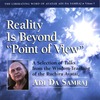
This talk excerpt is track 2 of the CD, Reality Is Beyond "Point Of View", a selection of talks by Adi Da (from the 30 years of His formal Teaching-Work) on the true nature of Reality. Brings together samples from His vast Divine Instruction relative to the true nature of Reality — as the unknowable Condition that is Always Already the Case, prior to the presumption of a separate “point of view”.
The album is available through iTunes, Spotify, and The Dawn Horse Press.
Note: Due to distribution policies set by CDBaby (and beyond the control of this website and Adidam), this video may not be playable in every country. However, sometimes, even when you can't play it on this page, you may be able to play it on YouTube: click here.
Tags: CD
The album is available through iTunes, Spotify, and The Dawn Horse Press.
Note: Due to distribution policies set by CDBaby (and beyond the control of this website and Adidam), this video may not be playable in every country. However, sometimes, even when you can't play it on this page, you may be able to play it on YouTube: click here.
Tags: CD
This audio excerpt is from a talk given by Adi Da on April 16, 1995, in Hymns To Me, at Adi Da Samrajashram.
Adi Da describes how the preparatory stages of practice of the Reality-Way of Adidam are associated with attention, and how the attachment to attention and all its objects prevents the Realization of Reality As It Is. He goes on to describe the unique advantage that His bodily Incarnation provides in the process of such Realization, for all time, and how the relationship to Him occurs — directly and personally — beyond the life of His human Form.
Tags: CD
Adi Da describes how the preparatory stages of practice of the Reality-Way of Adidam are associated with attention, and how the attachment to attention and all its objects prevents the Realization of Reality As It Is. He goes on to describe the unique advantage that His bodily Incarnation provides in the process of such Realization, for all time, and how the relationship to Him occurs — directly and personally — beyond the life of His human Form.
Tags: CD
In this talk excerpt, Avatar Adi Da speaks about how one must understand the tendency to presume oneself to be a victim, and must transcend all limitation in the process of Real-God-Realization.
ADI DA: You can suffer, or you can love. You can complain, or you can surrender. You can abuse, or you can bless. It is really just that simple. True maturity, God-Realizing maturity, manifests great compassion, great love, great help, endures greatly.
Tags: CD
ADI DA: You can suffer, or you can love. You can complain, or you can surrender. You can abuse, or you can bless. It is really just that simple. True maturity, God-Realizing maturity, manifests great compassion, great love, great help, endures greatly.
Tags: CD
Audio/Video Links:


Most Popular Categories:
- Adi Da's Talks (463)
- Devotees' Stories of Adi Da (150)
- Adi Da's Image-Art (68)
- Not-Two Is Peace (54)
- Formal Darshan Occasions (36)
- Adi Da's Poetry (11)
- Tribute to Adi Da's Life and Work (11)
- Avataric Discourses: 2004 - 2005 (196)
- DVDs (198) / CDs (240) from the Dawn Horse Press
- Multi-Part Series (67)