Adi Da Up Close
Audio/Video Library
Our multimedia library currently contains 1,024 YouTube video clips and audio clips about (or related to) Adi Da and Adidam.


An excerpt from the CD, The Dual Sensitivity That Moves The Heart: Two Discourses Given by His Divine Presence Avatar Adi Da Samraj, June 20 and 21, 1995.
In these exquisite Discourses, which were recorded over two consecutive nights on the island of Naitauba in Fiji, Avatar Adi Da Communicated essential Instruction on what He calls the "dual sensitivity" — or, the simultaneous sensitivity to the suffering of mortal existence and to the heart's impulse toward True Happiness.
ADI DA: It is not sufficient just to always remember that this is not paradise, that this is mortality-land, everything passes. . . . You must realize that your heart-disposition . . . cannot be satisfied with anything less than Infinite, Absolute Happiness, or Divine Realization. And on the basis of that dual sensitivity, I Call you to respond to Me.
Tags: CD

In these exquisite Discourses, which were recorded over two consecutive nights on the island of Naitauba in Fiji, Avatar Adi Da Communicated essential Instruction on what He calls the "dual sensitivity" — or, the simultaneous sensitivity to the suffering of mortal existence and to the heart's impulse toward True Happiness.
ADI DA: It is not sufficient just to always remember that this is not paradise, that this is mortality-land, everything passes. . . . You must realize that your heart-disposition . . . cannot be satisfied with anything less than Infinite, Absolute Happiness, or Divine Realization. And on the basis of that dual sensitivity, I Call you to respond to Me.
Tags: CD
CHRIS: Happy Danavira Mela to everyone!
I’ve sung Have Yourself a Merry Little Christmas to Beloved Adi Da many times over the years — at the Manner of Flowers, at Adi Da Samrajashram, at First People / Great Food Dish, etc. (as one of a small group of singers, and usually also as the keyboardist) — and I’m singing it to Him again (and all of you!) here. It is one of my favorite songs at this time of year.
For me (starting with Judy Garland's original film version), it has always been an emotion-filled song, by turns joyful, playful, nostalgic, and wistful — so that is how I sing it here. The karaoke arrangement is based on Michael Bublé's version.
Tags: Danavira Mela

I’ve sung Have Yourself a Merry Little Christmas to Beloved Adi Da many times over the years — at the Manner of Flowers, at Adi Da Samrajashram, at First People / Great Food Dish, etc. (as one of a small group of singers, and usually also as the keyboardist) — and I’m singing it to Him again (and all of you!) here. It is one of my favorite songs at this time of year.
For me (starting with Judy Garland's original film version), it has always been an emotion-filled song, by turns joyful, playful, nostalgic, and wistful — so that is how I sing it here. The karaoke arrangement is based on Michael Bublé's version.
Tags: Danavira Mela
[Contains Spanish subtitles. If the CC icon ("Subtitles/closed captions") has a red line under it, the subtitles should appear. If you don't see them, just press the CC icon to turn them on.]
Video excerpt from an early discourse by Adi Da Samraj on July 29, 1973.
This video clip is an excerpt from the DVD, The Relationship To The Guru Is The Constant In Life.
Tags: Spanish DVD

Video excerpt from an early discourse by Adi Da Samraj on July 29, 1973.
This video clip is an excerpt from the DVD, The Relationship To The Guru Is The Constant In Life.
Tags: Spanish DVD
[Contains Czech subtitles. If the CC icon ("Subtitles/closed captions") has a red line under it, the subtitles should appear. If you don't see them, just press the CC icon to turn them on.]
"Je mravenec ego?" ("Is an ant an ego?") is a video excerpt from a humorous and profoundly insightful Avataric Discourse (given by Adi Da on October 20, 2004 at Adi Da Samrajashram), Adi Da considers the difference between self-consciousness and egoity, referring to both humans and non-humans (including dogs, ants, and trees).
Tags: Czech Avataric Discourse

"Je mravenec ego?" ("Is an ant an ego?") is a video excerpt from a humorous and profoundly insightful Avataric Discourse (given by Adi Da on October 20, 2004 at Adi Da Samrajashram), Adi Da considers the difference between self-consciousness and egoity, referring to both humans and non-humans (including dogs, ants, and trees).
Tags: Czech Avataric Discourse
An audio excerpt from the new CD, The Knowledge Of Light, from The Dawn Horse Press.
In the early months of 1985, Avatar Adi Da was residing at His Hermitage-Island in Fiji, working intensively to complete the first edition of His Supreme Scriptural Text, The Dawn Horse Testament. Avatar Adi Da began this occasion by reciting a newly written essay, which He subsequently added to The Dawn Horse Testament — and then spoke at length about the import of the essay.
In this Discourse, Avatar Adi Da invites everyone to consider the implications of the common understanding that everything — all that you see, hear, breathe, taste, smell, feel — is energy, or light. Rather than suggesting yet another method of seeking within the infinite forms of experienced light, Avatar Adi Da Offers (and Is) the direct Transmission of Light — which Reveals Itself to be the Self-Radiant Bliss of Consciousness Itself.
ADI DA: The most intimate presumption, the real presumption — that all this is Light — should be sufficient to make your hair stand on end. Real Communion with Light, or True Baptism — founded on “self” understanding — produces ecstasy, profound transformation of the being, liberates you from all of your egoic psychology.
Tags: CD
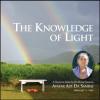
In the early months of 1985, Avatar Adi Da was residing at His Hermitage-Island in Fiji, working intensively to complete the first edition of His Supreme Scriptural Text, The Dawn Horse Testament. Avatar Adi Da began this occasion by reciting a newly written essay, which He subsequently added to The Dawn Horse Testament — and then spoke at length about the import of the essay.
In this Discourse, Avatar Adi Da invites everyone to consider the implications of the common understanding that everything — all that you see, hear, breathe, taste, smell, feel — is energy, or light. Rather than suggesting yet another method of seeking within the infinite forms of experienced light, Avatar Adi Da Offers (and Is) the direct Transmission of Light — which Reveals Itself to be the Self-Radiant Bliss of Consciousness Itself.
ADI DA: The most intimate presumption, the real presumption — that all this is Light — should be sufficient to make your hair stand on end. Real Communion with Light, or True Baptism — founded on “self” understanding — produces ecstasy, profound transformation of the being, liberates you from all of your egoic psychology.
Tags: CD
[Contains Czech subtitles. If the CC icon ("Subtitles/closed captions") has a red line under it, the subtitles should appear. If you don't see them, just press the CC icon to turn them on.]
Video excerpt from an early discourse by Adi Da Samraj on July 29, 1973.
This video clip is an excerpt from the DVD, The Relationship To The Guru Is The Constant In Life.
Adi Da would later make a similar communication in a very memorable way in “The Divine Avataric Self-Disclosure” (in The Aletheon):
ADI DA: The conditionally Apparent “world”-Process Of “Everything Changing” Is Simply The Natural “Play” Of Cosmic Life, In Which the (Always) two sides of every possibility come and go, In Cycles Of appearance and disappearance. Winter’s cold alternates with summer’s heat. Pain, Likewise, Follows every pleasure. Every appearance Is (Inevitably) Followed By its disappearance. There Is No Permanent “experience” In The Realm Of Cosmic Nature. One whose Whole bodily Devotion To Me Is Constant Simply Allows All Of This To Be So. Therefore, one who Truly Listens To Me and “Knows” Me Spontaneously Ceases To Add “self”-Contraction (and, Thus, “conditional-experience-causing” energy and intention) To This Relentless Round Of Natural and Futile Changes. . . Intrinsically egoless Self-Realization Of Me Is Possible Only When a living being (or body-mind-“self”) Has Whole bodily Ceased To React To The Always Changing Imposition Of Cosmic Nature. . . Those who Perfectly “Know” Me Tacitly Understand That whatever Is Not Always Already (or Eternally) Self-Existing and Self-Radiant Only Changes. . . Those who Perfectly “Know” Me Acknowledge (Tacitly, and With every Whole bodily act) That What Is Always Already The (One and Only) Case Never Changes. Such True Devotees Of Mine (who Perfectly “Know” Me) Perfectly Realize That The Entire Cosmic Realm Of Change—and Even the To-Me-Surrendered Whole body (itself)—Is Entirely Pervaded By Me (Always Self-Revealed As That Which Is Always Already The Case).
For more about Adi Da’s principle that what is not used becomes obsolete, read His Essay, “Right Principle and Right Self-Management: The Secrets of How To Change”, in The Aletheon.
Tags: Czech DVD

Video excerpt from an early discourse by Adi Da Samraj on July 29, 1973.
This video clip is an excerpt from the DVD, The Relationship To The Guru Is The Constant In Life.
Adi Da would later make a similar communication in a very memorable way in “The Divine Avataric Self-Disclosure” (in The Aletheon):
ADI DA: The conditionally Apparent “world”-Process Of “Everything Changing” Is Simply The Natural “Play” Of Cosmic Life, In Which the (Always) two sides of every possibility come and go, In Cycles Of appearance and disappearance. Winter’s cold alternates with summer’s heat. Pain, Likewise, Follows every pleasure. Every appearance Is (Inevitably) Followed By its disappearance. There Is No Permanent “experience” In The Realm Of Cosmic Nature. One whose Whole bodily Devotion To Me Is Constant Simply Allows All Of This To Be So. Therefore, one who Truly Listens To Me and “Knows” Me Spontaneously Ceases To Add “self”-Contraction (and, Thus, “conditional-experience-causing” energy and intention) To This Relentless Round Of Natural and Futile Changes. . . Intrinsically egoless Self-Realization Of Me Is Possible Only When a living being (or body-mind-“self”) Has Whole bodily Ceased To React To The Always Changing Imposition Of Cosmic Nature. . . Those who Perfectly “Know” Me Tacitly Understand That whatever Is Not Always Already (or Eternally) Self-Existing and Self-Radiant Only Changes. . . Those who Perfectly “Know” Me Acknowledge (Tacitly, and With every Whole bodily act) That What Is Always Already The (One and Only) Case Never Changes. Such True Devotees Of Mine (who Perfectly “Know” Me) Perfectly Realize That The Entire Cosmic Realm Of Change—and Even the To-Me-Surrendered Whole body (itself)—Is Entirely Pervaded By Me (Always Self-Revealed As That Which Is Always Already The Case).
For more about Adi Da’s principle that what is not used becomes obsolete, read His Essay, “Right Principle and Right Self-Management: The Secrets of How To Change”, in The Aletheon.
Tags: Czech DVD
[Contains Polish subtitles. If the CC icon ("Subtitles/closed captions") has a red line under it, the subtitles should appear. If you don't see them, just press the CC icon to turn them on.]
W tym humorystycznym i głęboko wnikliwym dyskursie Adi Da rozważa różnicę między samoświadomością a egotyzmem, odnosząc się zarówno do ludzi, jak i do nie-ludzi (w tym psów, mrówek i drzew).
"Czy mrówka to też ego?" ("Is an ant an ego?") is a video excerpt from a humorous and profoundly insightful Avataric Discourse (given by Adi Da on October 20, 2004 at Adi Da Samrajashram), Adi Da considers the difference between self-consciousness and egoity, referring to both humans and non-humans (including dogs, ants, and trees).
Tags: Avataric Discourse Polish

W tym humorystycznym i głęboko wnikliwym dyskursie Adi Da rozważa różnicę między samoświadomością a egotyzmem, odnosząc się zarówno do ludzi, jak i do nie-ludzi (w tym psów, mrówek i drzew).
"Czy mrówka to też ego?" ("Is an ant an ego?") is a video excerpt from a humorous and profoundly insightful Avataric Discourse (given by Adi Da on October 20, 2004 at Adi Da Samrajashram), Adi Da considers the difference between self-consciousness and egoity, referring to both humans and non-humans (including dogs, ants, and trees).
Tags: Avataric Discourse Polish
[Contains Finnish subtitles. If the CC icon ("Subtitles/closed captions") has a red line under it, the subtitles should appear. If you don't see them, just press the CC icon to turn them on.]
"Onko Muurahaisella Egoa?" ("Is an ant an ego?") is a video excerpt from a humorous and profoundly insightful Avataric Discourse (given by Adi Da on October 20, 2004 at Adi Da Samrajashram), Adi Da considers the difference between self-consciousness and egoity, referring to both humans and non-humans (including dogs, ants, and trees).
ADI DA: [Laughs] You generally attribute egoity to human beings, but you wonder about everything else. For instance, what about not something relatively inert like a rug or even just standing there and not seeming to be particularly responsive, like a tree. But what about a dog? Is a dog, do you think dogs are egos when you see them, just as readily as you think of human beings as egos? But, why do you draw the line? I mean how far does it go? Where do you stop thinking of living entities, at least, as egos? Do you just presume everything bigger than a cricket is an ego? Or is everything that moves in your, from your perspective experientially or in your natural presumptions, how far do, does the fact of egoity extend in your presumption.
Well, is an ant an ego in your presumption?
The word “ego” is actually a Greek word which means “I”. I consider it with you and talk about it in terms of self-contraction and so forth, but, so that’s the elaboration on its meaning, but the word simply means “I” which means the reference, self-reference, the reflexive, reflexive pronoun as it’s called of self-reference. So, does an ant feel self-referential?
You observe them protecting themselves and struggling with others. Couldn’t do so without some kind of self-consciousness, could it? So, you naturally presume that even something like an ant is, is a self, an ego, self-aware. Does something have to move from its spatial location? Does it have to be able to take a walk or, such as an ant or a human being, or can a tree? Does a tree have self-consciousness, exhibit self-consciousness. . .
What about trees? They are entities with apparent self-consciousness of a kind. They are in that sense, egos. But are they egoic? Are they functioning egoically? Are they feeling that they are in bondage and moved to seek as human beings are and as you feel in your own case, you see? Trees don’t seem to behave, generally speaking, in quite that way. They are self-conscious as organisms, but they don’t seem to be particularly disturbed about being trees. They seem more characterized by some kind of contemplation in which they don’t feel disturbed.
But if you observe non-humans, virtually all of them show signs of setting themselves apart and entering into a contemplative state that resembles some kind of a samadhi or meditative condition.
Why do you think human beings are disturbed? You see, why is human egoity what it is? If you observe how it appears in evidence in non-humans, suggests that human beings are the way they are because they’re confined, and not just confined by walls and bars. Some people are, and they get very disturbed there, and walk back and forth or get catatonic.
Your bondage is your own activity, and it also extends from conditions. Conditions can reinforce or seem to justify self-contraction. But still what you’re suffering is self-contraction itself.
So, human beings are actually confined, and they are self-confined, and otherwise, also, living in various modes and degrees of confinement by conditions of life and in fact, human beings feel confined by bodily existence, because however healthy you may be at the moment, you know you’re going to die, and are potentially, potentially, you could suffer any number of great happenings. And you anticipate that inevitably, you will, sooner or later, experience some fundamental difficulties that you would prefer not to have to endure, including disease and death.
Well, everything that’s physically living is going to die. The trouble, the difference is does it drive you crazy, make you seek, or are you at ease, because you haven’t lost touch with what transcends that possibility?
Tags: Avataric Discourse Finnish

"Onko Muurahaisella Egoa?" ("Is an ant an ego?") is a video excerpt from a humorous and profoundly insightful Avataric Discourse (given by Adi Da on October 20, 2004 at Adi Da Samrajashram), Adi Da considers the difference between self-consciousness and egoity, referring to both humans and non-humans (including dogs, ants, and trees).
ADI DA: [Laughs] You generally attribute egoity to human beings, but you wonder about everything else. For instance, what about not something relatively inert like a rug or even just standing there and not seeming to be particularly responsive, like a tree. But what about a dog? Is a dog, do you think dogs are egos when you see them, just as readily as you think of human beings as egos? But, why do you draw the line? I mean how far does it go? Where do you stop thinking of living entities, at least, as egos? Do you just presume everything bigger than a cricket is an ego? Or is everything that moves in your, from your perspective experientially or in your natural presumptions, how far do, does the fact of egoity extend in your presumption.
Well, is an ant an ego in your presumption?
The word “ego” is actually a Greek word which means “I”. I consider it with you and talk about it in terms of self-contraction and so forth, but, so that’s the elaboration on its meaning, but the word simply means “I” which means the reference, self-reference, the reflexive, reflexive pronoun as it’s called of self-reference. So, does an ant feel self-referential?
You observe them protecting themselves and struggling with others. Couldn’t do so without some kind of self-consciousness, could it? So, you naturally presume that even something like an ant is, is a self, an ego, self-aware. Does something have to move from its spatial location? Does it have to be able to take a walk or, such as an ant or a human being, or can a tree? Does a tree have self-consciousness, exhibit self-consciousness. . .
What about trees? They are entities with apparent self-consciousness of a kind. They are in that sense, egos. But are they egoic? Are they functioning egoically? Are they feeling that they are in bondage and moved to seek as human beings are and as you feel in your own case, you see? Trees don’t seem to behave, generally speaking, in quite that way. They are self-conscious as organisms, but they don’t seem to be particularly disturbed about being trees. They seem more characterized by some kind of contemplation in which they don’t feel disturbed.
But if you observe non-humans, virtually all of them show signs of setting themselves apart and entering into a contemplative state that resembles some kind of a samadhi or meditative condition.
Why do you think human beings are disturbed? You see, why is human egoity what it is? If you observe how it appears in evidence in non-humans, suggests that human beings are the way they are because they’re confined, and not just confined by walls and bars. Some people are, and they get very disturbed there, and walk back and forth or get catatonic.
Your bondage is your own activity, and it also extends from conditions. Conditions can reinforce or seem to justify self-contraction. But still what you’re suffering is self-contraction itself.
So, human beings are actually confined, and they are self-confined, and otherwise, also, living in various modes and degrees of confinement by conditions of life and in fact, human beings feel confined by bodily existence, because however healthy you may be at the moment, you know you’re going to die, and are potentially, potentially, you could suffer any number of great happenings. And you anticipate that inevitably, you will, sooner or later, experience some fundamental difficulties that you would prefer not to have to endure, including disease and death.
Well, everything that’s physically living is going to die. The trouble, the difference is does it drive you crazy, make you seek, or are you at ease, because you haven’t lost touch with what transcends that possibility?
Tags: Avataric Discourse Finnish
[Contains Spanish subtitles. If the CC icon ("Subtitles/closed captions") has a red line under it, the subtitles should appear. If you don't see them, just press the CC icon to turn them on.]
"¿Es una Hormiga un Ego?" ("Is an ant an ego?") is a video excerpt from a humorous and profoundly insightful Avataric Discourse (given by Adi Da on October 20, 2004 at Adi Da Samrajashram), Adi Da considers the difference between self-consciousness and egoity, referring to both humans and non-humans (including dogs, ants, and trees).
ADI DA: [Laughs] You generally attribute egoity to human beings, but you wonder about everything else. For instance, what about not something relatively inert like a rug or even just standing there and not seeming to be particularly responsive, like a tree. But what about a dog? Is a dog, do you think dogs are egos when you see them, just as readily as you think of human beings as egos? But, why do you draw the line? I mean how far does it go? Where do you stop thinking of living entities, at least, as egos? Do you just presume everything bigger than a cricket is an ego? Or is everything that moves in your, from your perspective experientially or in your natural presumptions, how far do, does the fact of egoity extend in your presumption.
Well, is an ant an ego in your presumption?
The word “ego” is actually a Greek word which means “I”. I consider it with you and talk about it in terms of self-contraction and so forth, but, so that’s the elaboration on its meaning, but the word simply means “I” which means the reference, self-reference, the reflexive, reflexive pronoun as it’s called of self-reference. So, does an ant feel self-referential?
You observe them protecting themselves and struggling with others. Couldn’t do so without some kind of self-consciousness, could it? So, you naturally presume that even something like an ant is, is a self, an ego, self-aware. Does something have to move from its spatial location? Does it have to be able to take a walk or, such as an ant or a human being, or can a tree? Does a tree have self-consciousness, exhibit self-consciousness. . .
What about trees? They are entities with apparent self-consciousness of a kind. They are in that sense, egos. But are they egoic? Are they functioning egoically? Are they feeling that they are in bondage and moved to seek as human beings are and as you feel in your own case, you see? Trees don’t seem to behave, generally speaking, in quite that way. They are self-conscious as organisms, but they don’t seem to be particularly disturbed about being trees. They seem more characterized by some kind of contemplation in which they don’t feel disturbed.
But if you observe non-humans, virtually all of them show signs of setting themselves apart and entering into a contemplative state that resembles some kind of a samadhi or meditative condition.
Why do you think human beings are disturbed? You see, why is human egoity what it is? If you observe how it appears in evidence in non-humans, suggests that human beings are the way they are because they’re confined, and not just confined by walls and bars. Some people are, and they get very disturbed there, and walk back and forth or get catatonic.
Your bondage is your own activity, and it also extends from conditions. Conditions can reinforce or seem to justify self-contraction. But still what you’re suffering is self-contraction itself.
So, human beings are actually confined, and they are self-confined, and otherwise, also, living in various modes and degrees of confinement by conditions of life and in fact, human beings feel confined by bodily existence, because however healthy you may be at the moment, you know you’re going to die, and are potentially, potentially, you could suffer any number of great happenings. And you anticipate that inevitably, you will, sooner or later, experience some fundamental difficulties that you would prefer not to have to endure, including disease and death.
Well, everything that’s physically living is going to die. The trouble, the difference is does it drive you crazy, make you seek, or are you at ease, because you haven’t lost touch with what transcends that possibility?
Tags: Avataric Discourse Spanish

"¿Es una Hormiga un Ego?" ("Is an ant an ego?") is a video excerpt from a humorous and profoundly insightful Avataric Discourse (given by Adi Da on October 20, 2004 at Adi Da Samrajashram), Adi Da considers the difference between self-consciousness and egoity, referring to both humans and non-humans (including dogs, ants, and trees).
ADI DA: [Laughs] You generally attribute egoity to human beings, but you wonder about everything else. For instance, what about not something relatively inert like a rug or even just standing there and not seeming to be particularly responsive, like a tree. But what about a dog? Is a dog, do you think dogs are egos when you see them, just as readily as you think of human beings as egos? But, why do you draw the line? I mean how far does it go? Where do you stop thinking of living entities, at least, as egos? Do you just presume everything bigger than a cricket is an ego? Or is everything that moves in your, from your perspective experientially or in your natural presumptions, how far do, does the fact of egoity extend in your presumption.
Well, is an ant an ego in your presumption?
The word “ego” is actually a Greek word which means “I”. I consider it with you and talk about it in terms of self-contraction and so forth, but, so that’s the elaboration on its meaning, but the word simply means “I” which means the reference, self-reference, the reflexive, reflexive pronoun as it’s called of self-reference. So, does an ant feel self-referential?
You observe them protecting themselves and struggling with others. Couldn’t do so without some kind of self-consciousness, could it? So, you naturally presume that even something like an ant is, is a self, an ego, self-aware. Does something have to move from its spatial location? Does it have to be able to take a walk or, such as an ant or a human being, or can a tree? Does a tree have self-consciousness, exhibit self-consciousness. . .
What about trees? They are entities with apparent self-consciousness of a kind. They are in that sense, egos. But are they egoic? Are they functioning egoically? Are they feeling that they are in bondage and moved to seek as human beings are and as you feel in your own case, you see? Trees don’t seem to behave, generally speaking, in quite that way. They are self-conscious as organisms, but they don’t seem to be particularly disturbed about being trees. They seem more characterized by some kind of contemplation in which they don’t feel disturbed.
But if you observe non-humans, virtually all of them show signs of setting themselves apart and entering into a contemplative state that resembles some kind of a samadhi or meditative condition.
Why do you think human beings are disturbed? You see, why is human egoity what it is? If you observe how it appears in evidence in non-humans, suggests that human beings are the way they are because they’re confined, and not just confined by walls and bars. Some people are, and they get very disturbed there, and walk back and forth or get catatonic.
Your bondage is your own activity, and it also extends from conditions. Conditions can reinforce or seem to justify self-contraction. But still what you’re suffering is self-contraction itself.
So, human beings are actually confined, and they are self-confined, and otherwise, also, living in various modes and degrees of confinement by conditions of life and in fact, human beings feel confined by bodily existence, because however healthy you may be at the moment, you know you’re going to die, and are potentially, potentially, you could suffer any number of great happenings. And you anticipate that inevitably, you will, sooner or later, experience some fundamental difficulties that you would prefer not to have to endure, including disease and death.
Well, everything that’s physically living is going to die. The trouble, the difference is does it drive you crazy, make you seek, or are you at ease, because you haven’t lost touch with what transcends that possibility?
Tags: Avataric Discourse Spanish
[Contains Italian subtitles. If the CC icon ("Subtitles/closed captions") has a red line under it, the subtitles should appear. If you don't see them, just press the CC icon to turn them on.]
"Le formiche hanno un ego" ("Ants have an ego") is a video excerpt from a humorous and profoundly insightful Avataric Discourse (given by Adi Da on October 20, 2004 at Adi Da Samrajashram), Adi Da considers the difference between self-consciousness and egoity, referring to both humans and non-humans (including dogs, ants, and trees).
ADI DA: [Laughs] You generally attribute egoity to human beings, but you wonder about everything else. For instance, what about not something relatively inert like a rug or even just standing there and not seeming to be particularly responsive, like a tree. But what about a dog? Is a dog, do you think dogs are egos when you see them, just as readily as you think of human beings as egos? But, why do you draw the line? I mean how far does it go? Where do you stop thinking of living entities, at least, as egos? Do you just presume everything bigger than a cricket is an ego? Or is everything that moves in your, from your perspective experientially or in your natural presumptions, how far do, does the fact of egoity extend in your presumption.
Well, is an ant an ego in your presumption?
The word “ego” is actually a Greek word which means “I”. I consider it with you and talk about it in terms of self-contraction and so forth, but, so that’s the elaboration on its meaning, but the word simply means “I” which means the reference, self-reference, the reflexive, reflexive pronoun as it’s called of self-reference. So, does an ant feel self-referential?
You observe them protecting themselves and struggling with others. Couldn’t do so without some kind of self-consciousness, could it? So, you naturally presume that even something like an ant is, is a self, an ego, self-aware. Does something have to move from its spatial location? Does it have to be able to take a walk or, such as an ant or a human being, or can a tree? Does a tree have self-consciousness, exhibit self-consciousness. . .
What about trees? They are entities with apparent self-consciousness of a kind. They are in that sense, egos. But are they egoic? Are they functioning egoically? Are they feeling that they are in bondage and moved to seek as human beings are and as you feel in your own case, you see? Trees don’t seem to behave, generally speaking, in quite that way. They are self-conscious as organisms, but they don’t seem to be particularly disturbed about being trees. They seem more characterized by some kind of contemplation in which they don’t feel disturbed.
But if you observe non-humans, virtually all of them show signs of setting themselves apart and entering into a contemplative state that resembles some kind of a samadhi or meditative condition.
Why do you think human beings are disturbed? You see, why is human egoity what it is? If you observe how it appears in evidence in non-humans, suggests that human beings are the way they are because they’re confined, and not just confined by walls and bars. Some people are, and they get very disturbed there, and walk back and forth or get catatonic.
Your bondage is your own activity, and it also extends from conditions. Conditions can reinforce or seem to justify self-contraction. But still what you’re suffering is self-contraction itself.
So, human beings are actually confined, and they are self-confined, and otherwise, also, living in various modes and degrees of confinement by conditions of life and in fact, human beings feel confined by bodily existence, because however healthy you may be at the moment, you know you’re going to die, and are potentially, potentially, you could suffer any number of great happenings. And you anticipate that inevitably, you will, sooner or later, experience some fundamental difficulties that you would prefer not to have to endure, including disease and death.
Well, everything that’s physically living is going to die. The trouble, the difference is does it drive you crazy, make you seek, or are you at ease, because you haven’t lost touch with what transcends that possibility?
Tags: Avataric Discourse Italian

"Le formiche hanno un ego" ("Ants have an ego") is a video excerpt from a humorous and profoundly insightful Avataric Discourse (given by Adi Da on October 20, 2004 at Adi Da Samrajashram), Adi Da considers the difference between self-consciousness and egoity, referring to both humans and non-humans (including dogs, ants, and trees).
ADI DA: [Laughs] You generally attribute egoity to human beings, but you wonder about everything else. For instance, what about not something relatively inert like a rug or even just standing there and not seeming to be particularly responsive, like a tree. But what about a dog? Is a dog, do you think dogs are egos when you see them, just as readily as you think of human beings as egos? But, why do you draw the line? I mean how far does it go? Where do you stop thinking of living entities, at least, as egos? Do you just presume everything bigger than a cricket is an ego? Or is everything that moves in your, from your perspective experientially or in your natural presumptions, how far do, does the fact of egoity extend in your presumption.
Well, is an ant an ego in your presumption?
The word “ego” is actually a Greek word which means “I”. I consider it with you and talk about it in terms of self-contraction and so forth, but, so that’s the elaboration on its meaning, but the word simply means “I” which means the reference, self-reference, the reflexive, reflexive pronoun as it’s called of self-reference. So, does an ant feel self-referential?
You observe them protecting themselves and struggling with others. Couldn’t do so without some kind of self-consciousness, could it? So, you naturally presume that even something like an ant is, is a self, an ego, self-aware. Does something have to move from its spatial location? Does it have to be able to take a walk or, such as an ant or a human being, or can a tree? Does a tree have self-consciousness, exhibit self-consciousness. . .
What about trees? They are entities with apparent self-consciousness of a kind. They are in that sense, egos. But are they egoic? Are they functioning egoically? Are they feeling that they are in bondage and moved to seek as human beings are and as you feel in your own case, you see? Trees don’t seem to behave, generally speaking, in quite that way. They are self-conscious as organisms, but they don’t seem to be particularly disturbed about being trees. They seem more characterized by some kind of contemplation in which they don’t feel disturbed.
But if you observe non-humans, virtually all of them show signs of setting themselves apart and entering into a contemplative state that resembles some kind of a samadhi or meditative condition.
Why do you think human beings are disturbed? You see, why is human egoity what it is? If you observe how it appears in evidence in non-humans, suggests that human beings are the way they are because they’re confined, and not just confined by walls and bars. Some people are, and they get very disturbed there, and walk back and forth or get catatonic.
Your bondage is your own activity, and it also extends from conditions. Conditions can reinforce or seem to justify self-contraction. But still what you’re suffering is self-contraction itself.
So, human beings are actually confined, and they are self-confined, and otherwise, also, living in various modes and degrees of confinement by conditions of life and in fact, human beings feel confined by bodily existence, because however healthy you may be at the moment, you know you’re going to die, and are potentially, potentially, you could suffer any number of great happenings. And you anticipate that inevitably, you will, sooner or later, experience some fundamental difficulties that you would prefer not to have to endure, including disease and death.
Well, everything that’s physically living is going to die. The trouble, the difference is does it drive you crazy, make you seek, or are you at ease, because you haven’t lost touch with what transcends that possibility?
Tags: Avataric Discourse Italian
Video excerpt from an early discourse by Adi Da Samraj on July 29, 1973.
This video clip is an excerpt from the DVD, The Relationship To The Guru Is The Constant In Life.
Adi Da would later make a similar communication in a very memorable way in “The Divine Avataric Self-Disclosure” (in The Aletheon):
ADI DA: The conditionally Apparent “world”-Process Of “Everything Changing” Is Simply The Natural “Play” Of Cosmic Life, In Which the (Always) two sides of every possibility come and go, In Cycles Of appearance and disappearance. Winter’s cold alternates with summer’s heat. Pain, Likewise, Follows every pleasure. Every appearance Is (Inevitably) Followed By its disappearance. There Is No Permanent “experience” In The Realm Of Cosmic Nature. One whose Whole bodily Devotion To Me Is Constant Simply Allows All Of This To Be So. Therefore, one who Truly Listens To Me and “Knows” Me Spontaneously Ceases To Add “self”-Contraction (and, Thus, “conditional-experience-causing” energy and intention) To This Relentless Round Of Natural and Futile Changes. . . Intrinsically egoless Self-Realization Of Me Is Possible Only When a living being (or body-mind-“self”) Has Whole bodily Ceased To React To The Always Changing Imposition Of Cosmic Nature. . . Those who Perfectly “Know” Me Tacitly Understand That whatever Is Not Always Already (or Eternally) Self-Existing and Self-Radiant Only Changes. . . Those who Perfectly “Know” Me Acknowledge (Tacitly, and With every Whole bodily act) That What Is Always Already The (One and Only) Case Never Changes. Such True Devotees Of Mine (who Perfectly “Know” Me) Perfectly Realize That The Entire Cosmic Realm Of Change—and Even the To-Me-Surrendered Whole body (itself)—Is Entirely Pervaded By Me (Always Self-Revealed As That Which Is Always Already The Case).
For more about Adi Da’s principle that what is not used becomes obsolete, read His Essay, “Right Principle and Right Self-Management: The Secrets of How To Change”, in The Aletheon.

This video clip is an excerpt from the DVD, The Relationship To The Guru Is The Constant In Life.
Adi Da would later make a similar communication in a very memorable way in “The Divine Avataric Self-Disclosure” (in The Aletheon):
ADI DA: The conditionally Apparent “world”-Process Of “Everything Changing” Is Simply The Natural “Play” Of Cosmic Life, In Which the (Always) two sides of every possibility come and go, In Cycles Of appearance and disappearance. Winter’s cold alternates with summer’s heat. Pain, Likewise, Follows every pleasure. Every appearance Is (Inevitably) Followed By its disappearance. There Is No Permanent “experience” In The Realm Of Cosmic Nature. One whose Whole bodily Devotion To Me Is Constant Simply Allows All Of This To Be So. Therefore, one who Truly Listens To Me and “Knows” Me Spontaneously Ceases To Add “self”-Contraction (and, Thus, “conditional-experience-causing” energy and intention) To This Relentless Round Of Natural and Futile Changes. . . Intrinsically egoless Self-Realization Of Me Is Possible Only When a living being (or body-mind-“self”) Has Whole bodily Ceased To React To The Always Changing Imposition Of Cosmic Nature. . . Those who Perfectly “Know” Me Tacitly Understand That whatever Is Not Always Already (or Eternally) Self-Existing and Self-Radiant Only Changes. . . Those who Perfectly “Know” Me Acknowledge (Tacitly, and With every Whole bodily act) That What Is Always Already The (One and Only) Case Never Changes. Such True Devotees Of Mine (who Perfectly “Know” Me) Perfectly Realize That The Entire Cosmic Realm Of Change—and Even the To-Me-Surrendered Whole body (itself)—Is Entirely Pervaded By Me (Always Self-Revealed As That Which Is Always Already The Case).
For more about Adi Da’s principle that what is not used becomes obsolete, read His Essay, “Right Principle and Right Self-Management: The Secrets of How To Change”, in The Aletheon.
In this humorous and profoundly insightful Avataric Discourse (given by Adi Da on October 20, 2004 at Adi Da Samrajashram), Adi Da considers the difference between self-consciousness and egoity, referring to both humans and non-humans (including dogs, ants, and trees).
ADI DA: [Laughs] You generally attribute egoity to human beings, but you wonder about everything else. For instance, what about not something relatively inert like a rug or even just standing there and not seeming to be particularly responsive, like a tree. But what about a dog? Is a dog, do you think dogs are egos when you see them, just as readily as you think of human beings as egos? But, why do you draw the line? I mean how far does it go? Where do you stop thinking of living entities, at least, as egos? Do you just presume everything bigger than a cricket is an ego? Or is everything that moves in your, from your perspective experientially or in your natural presumptions, how far do, does the fact of egoity extend in your presumption.
Well, is an ant an ego in your presumption?
The word “ego” is actually a Greek word which means “I”. I consider it with you and talk about it in terms of self-contraction and so forth, but, so that’s the elaboration on its meaning, but the word simply means “I” which means the reference, self-reference, the reflexive, reflexive pronoun as it’s called of self-reference. So, does an ant feel self-referential?
You observe them protecting themselves and struggling with others. Couldn’t do so without some kind of self-consciousness, could it? So, you naturally presume that even something like an ant is, is a self, an ego, self-aware. Does something have to move from its spatial location? Does it have to be able to take a walk or, such as an ant or a human being, or can a tree? Does a tree have self-consciousness, exhibit self-consciousness. . .
What about trees? They are entities with apparent self-consciousness of a kind. They are in that sense, egos. But are they egoic? Are they functioning egoically? Are they feeling that they are in bondage and moved to seek as human beings are and as you feel in your own case, you see? Trees don’t seem to behave, generally speaking, in quite that way. They are self-conscious as organisms, but they don’t seem to be particularly disturbed about being trees. They seem more characterized by some kind of contemplation in which they don’t feel disturbed.
But if you observe non-humans, virtually all of them show signs of setting themselves apart and entering into a contemplative state that resembles some kind of a samadhi or meditative condition.
Why do you think human beings are disturbed? You see, why is human egoity what it is? If you observe how it appears in evidence in non-humans, suggests that human beings are the way they are because they’re confined, and not just confined by walls and bars. Some people are, and they get very disturbed there, and walk back and forth or get catatonic.
Your bondage is your own activity, and it also extends from conditions. Conditions can reinforce or seem to justify self-contraction. But still what you’re suffering is self-contraction itself.
So, human beings are actually confined, and they are self-confined, and otherwise, also, living in various modes and degrees of confinement by conditions of life and in fact, human beings feel confined by bodily existence, because however healthy you may be at the moment, you know you’re going to die, and are potentially, potentially, you could suffer any number of great happenings. And you anticipate that inevitably, you will, sooner or later, experience some fundamental difficulties that you would prefer not to have to endure, including disease and death.
Well, everything that’s physically living is going to die. The trouble, the difference is does it drive you crazy, make you seek, or are you at ease, because you haven’t lost touch with what transcends that possibility?
Tags: Avataric Discourse
ADI DA: [Laughs] You generally attribute egoity to human beings, but you wonder about everything else. For instance, what about not something relatively inert like a rug or even just standing there and not seeming to be particularly responsive, like a tree. But what about a dog? Is a dog, do you think dogs are egos when you see them, just as readily as you think of human beings as egos? But, why do you draw the line? I mean how far does it go? Where do you stop thinking of living entities, at least, as egos? Do you just presume everything bigger than a cricket is an ego? Or is everything that moves in your, from your perspective experientially or in your natural presumptions, how far do, does the fact of egoity extend in your presumption.
Well, is an ant an ego in your presumption?
The word “ego” is actually a Greek word which means “I”. I consider it with you and talk about it in terms of self-contraction and so forth, but, so that’s the elaboration on its meaning, but the word simply means “I” which means the reference, self-reference, the reflexive, reflexive pronoun as it’s called of self-reference. So, does an ant feel self-referential?
You observe them protecting themselves and struggling with others. Couldn’t do so without some kind of self-consciousness, could it? So, you naturally presume that even something like an ant is, is a self, an ego, self-aware. Does something have to move from its spatial location? Does it have to be able to take a walk or, such as an ant or a human being, or can a tree? Does a tree have self-consciousness, exhibit self-consciousness. . .
What about trees? They are entities with apparent self-consciousness of a kind. They are in that sense, egos. But are they egoic? Are they functioning egoically? Are they feeling that they are in bondage and moved to seek as human beings are and as you feel in your own case, you see? Trees don’t seem to behave, generally speaking, in quite that way. They are self-conscious as organisms, but they don’t seem to be particularly disturbed about being trees. They seem more characterized by some kind of contemplation in which they don’t feel disturbed.
But if you observe non-humans, virtually all of them show signs of setting themselves apart and entering into a contemplative state that resembles some kind of a samadhi or meditative condition.
Why do you think human beings are disturbed? You see, why is human egoity what it is? If you observe how it appears in evidence in non-humans, suggests that human beings are the way they are because they’re confined, and not just confined by walls and bars. Some people are, and they get very disturbed there, and walk back and forth or get catatonic.
Your bondage is your own activity, and it also extends from conditions. Conditions can reinforce or seem to justify self-contraction. But still what you’re suffering is self-contraction itself.
So, human beings are actually confined, and they are self-confined, and otherwise, also, living in various modes and degrees of confinement by conditions of life and in fact, human beings feel confined by bodily existence, because however healthy you may be at the moment, you know you’re going to die, and are potentially, potentially, you could suffer any number of great happenings. And you anticipate that inevitably, you will, sooner or later, experience some fundamental difficulties that you would prefer not to have to endure, including disease and death.
Well, everything that’s physically living is going to die. The trouble, the difference is does it drive you crazy, make you seek, or are you at ease, because you haven’t lost touch with what transcends that possibility?
Tags: Avataric Discourse
This is a video excerpt from Adi Da's Avataric Discourse of October 20, 2004, at Adi Da Samrajashram. In this excerpt, Adi Da speaks about the Big Bang theory in the context of the ego’s logic of cause-and-effect, and how egos tend to mistakenly confuse "first cause" with God or Reality.
The full talk is available on the DVD, The Ego's Logic of Cause-and-Effect (nearly four hours long). In this talk, Adi Da points out how the logic of cause-and-effect is operative not only in the conventional religious presumption that the Divine is the Cause of the world, but also in all human historical traditions—from the most ancient astrologically based cultures, to various Western philosophies, to the esoteric traditions that posit a subjective source for phenomena.
The Truth of the matter, Avatar Adi Da Reveals, is this: Everything and everyone that arises is merely an apparent modification of Reality Itself. Reality Itself is always Prior to the universe of conditional beings and things. And, ultimately, the process of Realizing Reality Itself utterly Outshines both the question of cause and the noticing of effects.
Tags: Avataric Discourse DVD

The full talk is available on the DVD, The Ego's Logic of Cause-and-Effect (nearly four hours long). In this talk, Adi Da points out how the logic of cause-and-effect is operative not only in the conventional religious presumption that the Divine is the Cause of the world, but also in all human historical traditions—from the most ancient astrologically based cultures, to various Western philosophies, to the esoteric traditions that posit a subjective source for phenomena.
The Truth of the matter, Avatar Adi Da Reveals, is this: Everything and everyone that arises is merely an apparent modification of Reality Itself. Reality Itself is always Prior to the universe of conditional beings and things. And, ultimately, the process of Realizing Reality Itself utterly Outshines both the question of cause and the noticing of effects.
Tags: Avataric Discourse DVD
Video excerpt from an Avataric Discourse given by Adi Da Samraj at Adi Da Samrajashram, on October 20, 2004. In this excerpt, Avatar Adi Da speaks about the Big Bang theory in the context of the ego's logic of cause-and-effect.
The complete Avataric Discourse (nearly four hours long) is available on the DVD, The Ego's Logic of Cause-and-Effect.
In this Discourse, Avatar Adi Da points out that the logic of cause-and-effect is operative not only in the conventional religious presumption that the Divine is the Cause of the world, but also in all human historical traditions—from the most ancient astrologically based cultures, to various Western philosophies, to the esoteric traditions that posit a subjective source for phenomena.
The Truth of the matter, Avatar Adi Da Reveals, is this: Everything and everyone that arises is merely an apparent modification of Reality Itself. Reality Itself is always Prior to the universe of conditional beings and things. And, ultimately, the process of Realizing Reality Itself utterly Outshines both the question of cause and the noticing of effects.
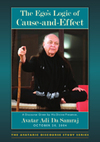
The complete Avataric Discourse (nearly four hours long) is available on the DVD, The Ego's Logic of Cause-and-Effect.
In this Discourse, Avatar Adi Da points out that the logic of cause-and-effect is operative not only in the conventional religious presumption that the Divine is the Cause of the world, but also in all human historical traditions—from the most ancient astrologically based cultures, to various Western philosophies, to the esoteric traditions that posit a subjective source for phenomena.
The Truth of the matter, Avatar Adi Da Reveals, is this: Everything and everyone that arises is merely an apparent modification of Reality Itself. Reality Itself is always Prior to the universe of conditional beings and things. And, ultimately, the process of Realizing Reality Itself utterly Outshines both the question of cause and the noticing of effects.
[Note: We reposted this video from Vimeo. Not everyone will be able to play this video on this web page, but you can always watch it on Vimeo.]
In this video, longtime devotee and Adidam educator, Carolyn Lee, introduces "The Zero Point", a retreat taking place at the European Danda, April 28 - 30, 2017.
Read or watch the daily news these days and you will find it filled with identity politics and the fear and anxiety that such politics engenders. Identity politics is a major threat to the world. In this retreat, we explore the root of identity politics: the presumption of difference and separateness. We also study and consider Adi Da's Wisdom on understanding, un-learning, and transcending the illusion of separateness and the act of separation, and Realizing Prior Unity, Non-Separateness, and unlimited relatedness to everything and everyone.
The "Zero Point" is the place where we can drop all the limited and superficial points of view, and find the profound depth of Reality Itself. This has the potential for initiating a Reality-informed and Reality-transformed personal process and a collective activism in the contemporary world.
For more information about the retreat, write info@adidam.org.
Tags: peace

In this video, longtime devotee and Adidam educator, Carolyn Lee, introduces "The Zero Point", a retreat taking place at the European Danda, April 28 - 30, 2017.
Read or watch the daily news these days and you will find it filled with identity politics and the fear and anxiety that such politics engenders. Identity politics is a major threat to the world. In this retreat, we explore the root of identity politics: the presumption of difference and separateness. We also study and consider Adi Da's Wisdom on understanding, un-learning, and transcending the illusion of separateness and the act of separation, and Realizing Prior Unity, Non-Separateness, and unlimited relatedness to everything and everyone.
The "Zero Point" is the place where we can drop all the limited and superficial points of view, and find the profound depth of Reality Itself. This has the potential for initiating a Reality-informed and Reality-transformed personal process and a collective activism in the contemporary world.
For more information about the retreat, write info@adidam.org.
Tags: peace
Audio/Video Links:


Most Popular Categories:
- Adi Da's Talks (463)
- Devotees' Stories of Adi Da (150)
- Adi Da's Image-Art (68)
- Not-Two Is Peace (54)
- Formal Darshan Occasions (36)
- Adi Da's Poetry (11)
- Tribute to Adi Da's Life and Work (11)
- Avataric Discourses: 2004 - 2005 (196)
- DVDs (198) / CDs (240) from the Dawn Horse Press
- Multi-Part Series (67)